Best eSIM for the USA in 2026: Coverage, Data Plans & Setup

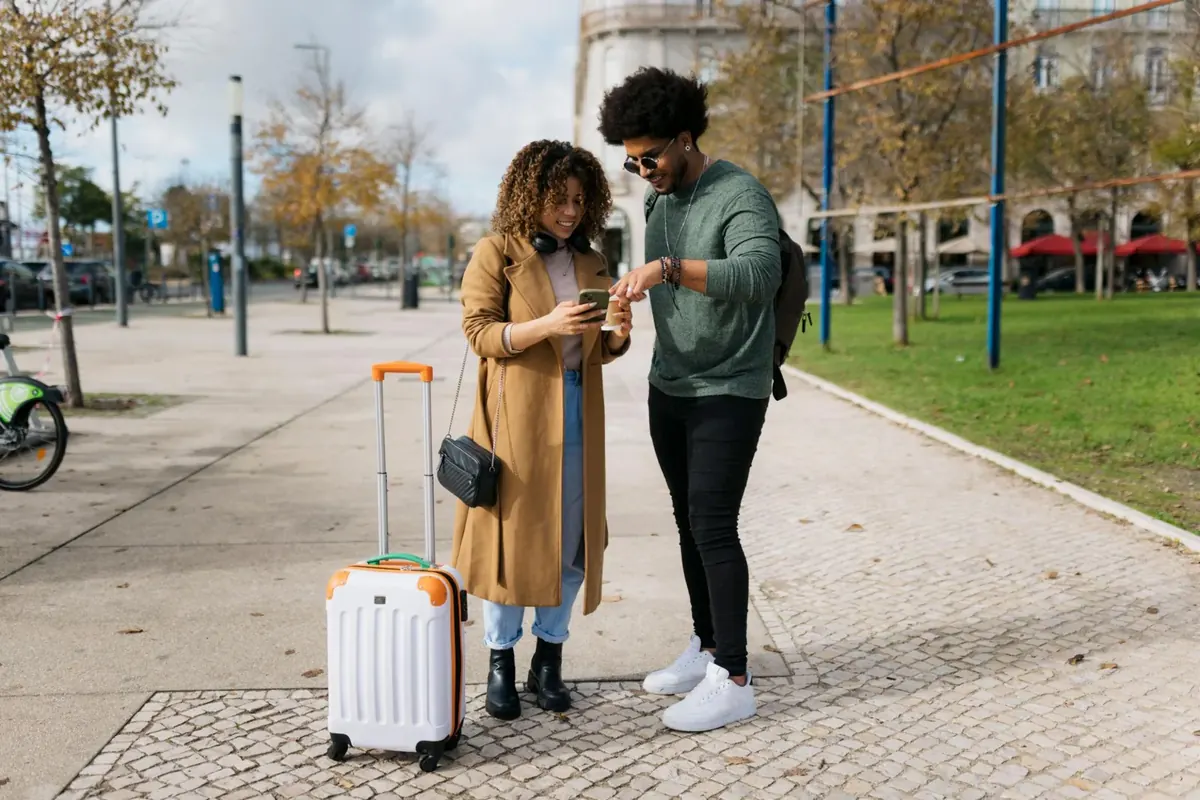
The USA is one of the easiest places in the world to use a travel eSIM, and also one where the wrong choice can leave you with a dead signal on a road trip or a national-park detour. The three big networks (AT&T, T-Mobile, and Verizon) cover the country differently, and most travel eSIMs ride on just one or two of them. Here's how to pick a plan that actually works where you're going, what it should cost, and how to set it up before you fly.
The good news is that you do not need to overthink it for most trips. If you are flying into a major city and sticking to the well-trodden tourist routes, almost any reputable plan will keep you connected. The choice gets more interesting once your itinerary leaves the interstate, crosses a border, or stretches into the kind of country where the only thing on the horizon is more horizon. This guide walks through both cases so you can buy once and forget about it.
TL;DR
Go with Esim70 if you're visiting cities, towns, and the usual tourist routes, want clear per-day pricing, and prefer to see every cost before creating an account. For the vast majority of US trips, New York, LA, Vegas, Orlando, San Francisco, a coastal road trip, coverage on the major networks is excellent and the value is hard to beat.
Look harder at the underlying network if your trip goes deep into remote areas like backcountry national parks, rural Montana, or the desert stretches of the Southwest. There, the network the eSIM uses matters more than the brand, and Verizon and AT&T tend to reach further off the interstate than T-Mobile.
Either way, US eSIMs activate the same way: scan a QR code, and your data works the moment you land.
Quick comparison
| Factor | What to look for | Why it matters |
|---|---|---|
| Network | AT&T, T-Mobile, or Verizon | Decides real-world coverage, especially rural |
| 5G access | Included on most US plans | T-Mobile leads on 5G reach |
| Data amount | 1GB to 50GB+ | Match to trip length and habits |
| Validity | 7 / 15 / 30 days | Buy slightly more than your trip |
| Pricing clarity | Per-day cost shown upfront | Easier to compare at a glance |
| Activation | QR code, auto or manual | Install before you fly, activate on arrival |
Coverage: it's about the network, not just the brand
Most US travel eSIMs connect through AT&T or T-Mobile, sometimes both, and a few reach Verizon. Here's the honest breakdown:
- T-Mobile has the widest 5G footprint and is excellent in and around cities. It can thin out in remote rural pockets.
- AT&T is the balanced mainstream choice, with strong urban and suburban coverage and solid reach along most highways.
- Verizon still wins for sheer rural and backcountry reliability, with strong LTE fallback where 5G doesn't reach.
For a typical trip, major cities, tourist destinations, interstate travel, any reputable eSIM gives you fast, reliable data. The only time you need to be picky is if you're heading somewhere genuinely remote, in which case check which network the plan uses before you buy. A plan riding on T-Mobile will fly in Chicago and crawl in a far corner of Wyoming, while a Verizon-based plan makes the opposite trade.
It helps to think about the difference between city coverage and rural coverage rather than the brand on the box. In a downtown core, you are competing with thousands of other devices for the same towers, so on a busy afternoon you might notice speeds dip even with full bars. Out in the open country it is the reverse: there are barely any other users, but the towers themselves are far apart, so what you really want is a network that simply reaches you at all. That is why a plan that feels blazing fast in Manhattan can feel sluggish at a trailhead, and vice versa.
City coverage vs. national parks and rural routes
If your USA trip is mostly cities and the suburbs around them, you can stop worrying about networks entirely. Coverage in places like New York, LA, Vegas, Orlando, and San Francisco is dense and fast across all the major networks, and a coastal road trip rarely strays far from a tower.
The picture changes once you point the car at the empty spaces. Backcountry national parks, rural Montana, and the desert stretches of the Southwest are where signal becomes a real variable. Inside the big parks specifically, expect coverage to live near the visitor centers, lodges, and main park roads, then fade as you head into the canyons, valleys, and trail networks. That is normal even for locals, and it is not something any travel eSIM can fully fix, because the eSIM is only as good as the network towers in that exact spot.
A few practical habits make a remote leg far less stressful. Download offline maps for the area before you lose signal, screenshot or save any reservations and directions, and let people know your rough plan if you are heading somewhere truly isolated. Treat any bars you do get out there as a bonus rather than a guarantee, and you will not get caught out.
How much data do you need in the USA?
Americans lean heavily on data, from ride-share apps and maps to mobile boarding passes and QR-code restaurant menus. A rough guide per traveler:
- Light (maps, messaging, the odd browse): about 1GB per 3 days
- Moderate (social media, browsing, some video): about 1GB per day
- Heavy (streaming, hotspot, video calls): 2 to 3GB per day
For a one-week city trip, most people land comfortably in the 3 to 7GB range. If you'll tether a laptop or stream in the evenings, size up. Topping up mid-trip is easy, so there's no need to massively over-buy upfront.
Road trips deserve their own thought. Hours of turn-by-turn navigation, streaming music or podcasts in the car, and uploading photos at every scenic stop add up faster than a city day spent half on hotel Wi-Fi. If you are driving long distances, lean toward the higher end of your estimate, or pick a plan with comfortable headroom so a single long day behind the wheel does not eat your whole week. If you genuinely cannot guess, our guide to how much data you need walks through it activity by activity.
Pricing: what's fair in 2026
US eSIM data has gotten cheap. You'll find 1GB short-validity plans in the low single digits and larger 10GB-plus buckets that work out to a couple of dollars per GB. Unlimited-style plans (often with a high-speed "fair use" cap, then slower speeds) sit higher but suit heavy streamers.
Esim70 keeps the per-day cost visible right on each plan card, so you can compare a 5GB/15-day plan against a 10GB/30-day one without doing mental math. Prices on every provider shift often, so always check the current rate for your exact dates before buying.
When you compare, look past the headline number to the per-day and per-GB cost, since a slightly pricier plan with more data or a longer window often works out cheaper for the actual trip you are taking. The cost to beat is your home carrier's roaming, which can quietly outrun a whole month of eSIM data in a few days abroad. If that is your worry, the breakdown in how to avoid roaming charges and the eSIM vs SIM vs roaming comparison are worth a read before you book.
Traveling the USA plus Mexico or Canada
Plenty of US trips spill across a border, whether it is a day in Tijuana, a drive up to Vancouver, or a longer loop through North America. If that sounds like your plan, decide upfront whether you want one regional plan that spans multiple countries or separate single-country eSIMs you switch between.
A multi-country plan keeps things simple: one install, one balance, no fiddling at the border. Separate plans can sometimes be cheaper per country and give you the best local network in each, at the cost of a little more setup. Either way, check that the plan you choose actually lists the countries you will visit before you buy, because a US-only eSIM will not magically work the moment you cross into Mexico or Canada. If your itinerary leans south, our guide to the best eSIM for Mexico covers the local picture.
Activation and setup
Setup takes about three minutes:
- Buy your US plan on the website or app.
- You'll get a QR code by email immediately.
- On your phone, open Settings > Mobile/Cellular > Add eSIM.
- Scan the QR code.
- Set it to activate on arrival, or to auto-activate when it connects to a US network.
Install before you fly while you still have Wi-Fi. Your validity period only starts when the eSIM connects to a US network, so installing early costs you nothing. Keep your home SIM in place for calls and texts on your usual number, and let the eSIM handle data.
One detail worth flagging: newer iPhone models sold in the US are eSIM-only, with no physical SIM tray at all. That does not change anything for you as a traveler with an eSIM plan, but if you are bringing an older phone or borrowing a device, it is worth confirming it supports eSIM first. Our note on eSIM-only iPhone travel and the supported devices list cover the specifics, and the step-by-step in how to install an eSIM walks you through it screen by screen.
Troubleshooting: when your data won't connect
Most US eSIMs just work, but if you land and see no data, run through the quick fixes before you panic. First, confirm the eSIM line is actually turned on and selected for mobile data in your settings, since installing it does not always switch it on. Second, make sure data roaming is enabled for that line, because a travel eSIM technically roams onto the local network. Third, toggle airplane mode on and off, or restart the phone, to force it to grab the strongest available signal.
If you are still stuck, check that you are inside the plan's coverage area and not in one of those rural dead zones, and confirm the plan's validity has started. A surprising number of "broken" eSIMs are simply plans that have not connected to a US network yet, or phones still clinging to the home SIM for data. Our eSIM not working checklist goes deeper if the basics do not solve it.
When an eSIM is the right call for the USA
- You're visiting cities, towns, and mainstream destinations, which covers almost everyone.
- You want to avoid your home carrier's roaming fees, which can dwarf a whole month of eSIM data.
- You like seeing per-day pricing and total cost before committing.
- You want to be online the moment you land, with no airport SIM-shop queue.
When to consider an alternative
- Very remote travel: for deep-wilderness national parks or rural stretches, prioritize a plan on Verizon or AT&T, or carry a backup.
- Long stays (months): a US prepaid physical SIM or postpaid plan may work out cheaper and give you a local number.
- You need a US phone number for calls, texts, or two-factor codes. Most travel eSIMs are data-only, so pair one with your home SIM or a separate number service.
The bottom line
For the overwhelming majority of US trips, a travel eSIM is the simplest, cheapest, and most flexible way to stay connected, and Esim70 stands out for clear per-day pricing, instant delivery, and coverage on the major networks where travelers actually go. Just match the data amount to your habits, double-check the network if your route gets remote, and install before you fly.
Ready to compare? Browse Esim70's US plans, with all pricing shown upfront and no account required. New to eSIMs? Start with how to install an eSIM or see how to choose the best travel eSIM.
Frequently asked questions
Which network does a US eSIM use?
It depends on the plan. Most use AT&T or T-Mobile, and some reach Verizon. For city and highway travel any of them is fine, while for remote areas you'll want a Verizon- or AT&T-based plan.
Will I get 5G in the USA?
Yes, 5G is included on most US travel eSIM plans, as long as your phone supports it and you're in a 5G coverage area. T-Mobile-based plans have the widest 5G reach.
Can I use my eSIM for hotspot or tethering in the USA?
Generally yes. Esim70 supports tethering on its plans. Heavy hotspot use burns through data fast, so size your plan accordingly.
Do US eSIMs include a phone number for calls and texts?
Most travel eSIMs are data-only, so they don't come with a US phone number. Keep your home SIM active alongside the eSIM if you need to receive calls, texts, or two-factor codes on your usual number, or add a separate number service.
Can I use one eSIM for the USA, Mexico, and Canada?
Only if the plan specifically lists all three countries. A US-only eSIM won't work across the border, so choose a multi-country regional plan if you're crossing into Mexico or Canada, and check the coverage list before you buy.
Will my eSIM work inside national parks?
Often near the visitor centers, lodges, and main roads, but coverage tends to fade deeper into the backcountry. Download offline maps before you head in, and lean toward a Verizon- or AT&T-based plan if remote parks are a big part of your trip.
When should I install the eSIM?
Install it before you fly, while you still have Wi-Fi at home. The validity period only starts once it connects to a US network, so there's no downside to setting it up early and choosing to activate on arrival.
Convinced?
Try Esim70 — plans from $1.36/day
150+ countries · Instant delivery · No commitment.
Related articles
 DestinationsMay 25, 202618 min read
Best eSIM for Australia 2026: Telstra & the Outback
 DestinationsMay 6, 202611 min read
Best eSIM for China in 2026: Bypass the Great Firewall, Coverage & Setup
 DestinationsMay 1, 202611 min read
Best eSIM for India in 2026: Airtel & Jio Coverage, Setup & the KYC Rule
 DestinationsApr 29, 20269 min read
Best eSIM for Mexico in 2026: Telcel Coverage, Data Plans & Setup