eSIM vs Physical SIM: Key Differences, Pros and Cons
eSIM vs physical SIM compared on setup, signal, security, travel and cost, plus a simple decision table to help you pick the right one.

Reviewed by Jaseel S
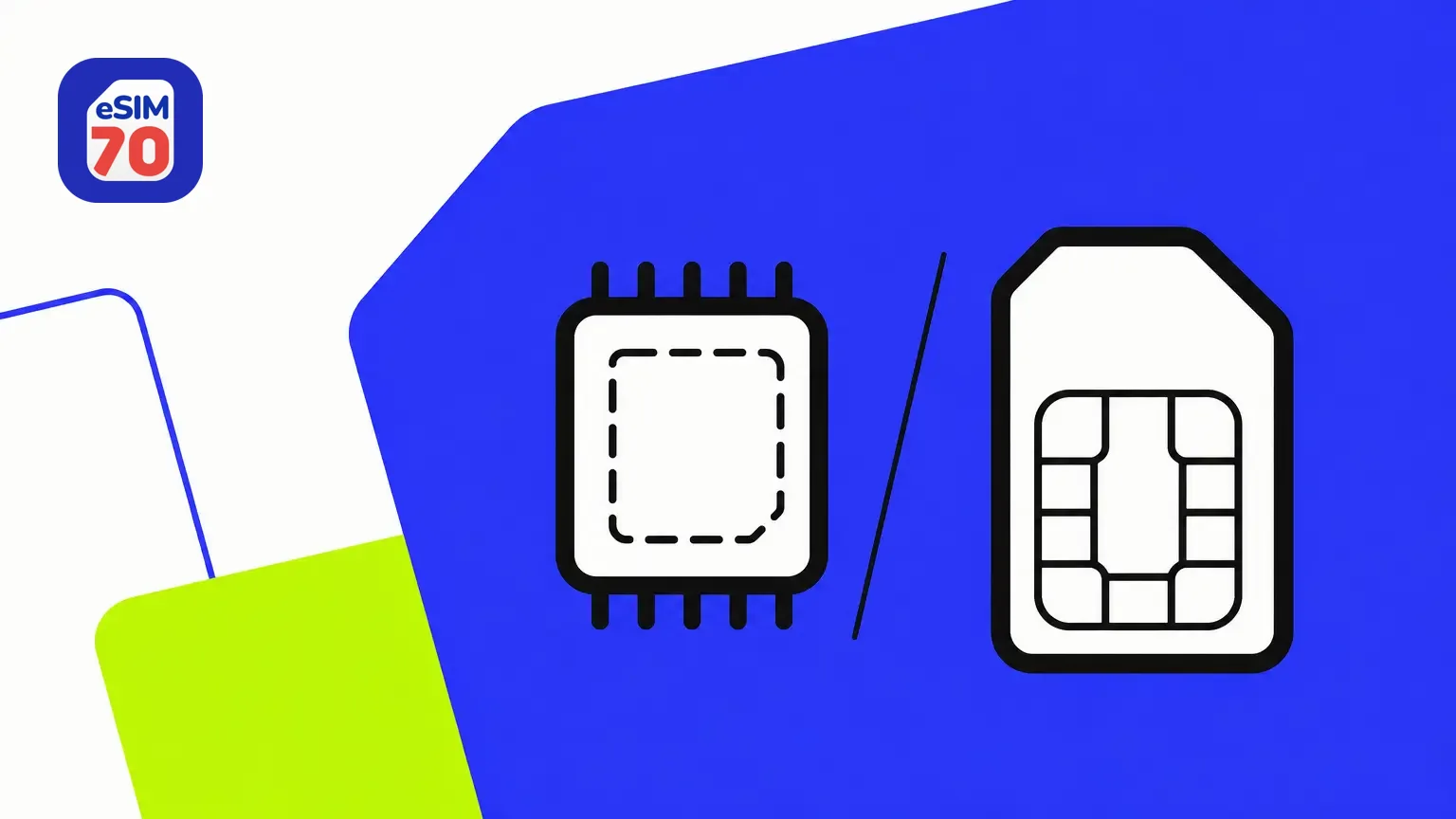
Quick answer: An eSIM and a physical SIM do the same job: they connect your phone to a mobile network. The difference is the form. A physical SIM is a removable card you insert into a tray, while an eSIM is a chip built into your phone that you download a plan onto. Signal, speed and coverage are the same. An eSIM is quicker to set up and can hold several plans; a physical SIM is easier to move between phones and works in almost any device.
This guide compares the two side by side, lists the pros and cons of each, and ends with a simple table to help you choose the right one for how you use your phone.
eSIM vs physical SIM at a glance
A physical SIM (sometimes called a pSIM) is the small plastic card with a gold chip that slides into your phone's SIM tray. Most phones today use the nano-SIM size.
An eSIM (embedded SIM) is a SIM chip soldered inside the phone. Instead of inserting a card, you download an eSIM profile, which holds your plan, onto that chip. If you are new to eSIMs, start with what an eSIM is and how it works.
| Physical SIM | eSIM | |
|---|---|---|
| What it is | A removable plastic card with a chip | A chip built into the phone; the plan is downloaded |
| Getting a plan | Order a card or pick one up in a store | Download it in minutes over Wi-Fi or mobile data |
| Plans per SIM | One per card | Several stored, usually two active at once |
| Switching plans | Swap the card by hand | Change lines in Settings |
| Signal and speed | Same | Same |
| Cost | Depends on the plan | Depends on the plan |
| Changing phones | Move the card to the new phone | Transfer it in settings or have it reissued |
| If your phone is stolen | The card can be removed and reused | It can't be removed |
| Device support | Almost every phone | Newer, unlocked phones |
How eSIMs and physical SIMs differ
Setup and activation
With a physical SIM, you wait for a card in the mail or visit a store, then open the SIM tray with a pin and insert the card. Some carriers also ask you to activate it online.
With an eSIM, you buy a plan and install it by scanning a QR code or tapping install in your provider's app. It usually takes a few minutes, but you need an internet connection while the profile downloads.
Holding and switching plans
One physical card holds one plan, and most phones have a single SIM tray. To change plans, you swap cards.
An eSIM chip can store several plans, such as your home line, a work line and a travel data plan. You switch between them in Settings, and most phones let you keep two lines active at the same time.
Signal, speed and coverage
There is no difference. The SIM only proves who you are to the network; your phone's antenna and modem handle the actual connection. Your speed and coverage depend on the network and plan you use, not on whether the SIM is a card or a chip.
Battery life
The SIM type makes no meaningful difference to battery life. What can use slightly more power is keeping two lines active at once, and that applies whether those lines are eSIMs or physical SIMs.
Security
If your phone is stolen, a thief can pull out a physical SIM and put it into another phone to receive your calls and texts, including one-time login codes. An eSIM can't be removed, so that route is closed.
Neither type protects against SIM-swap fraud, where a scammer persuades your carrier to move your number to a new SIM. That targets your carrier account, so a PIN or passcode on the account is the best defense for both.
Travel
With a physical SIM abroad, you usually find a store or airport kiosk after landing, may need to show your passport, and swap out your home SIM, which means losing access to your home number unless your phone has a second tray.
With an eSIM, you can buy and install a travel plan before you leave, switch it on when you land, and keep your home SIM active for calls and texts. The trade-off: many travel eSIMs are data-only, while local physical SIMs more often include a local phone number. Either way, your phone must be unlocked.
Changing or breaking your phone
A physical SIM is easiest here: you move the card to the new phone in seconds, even if the old one is broken.
Many recent phones can transfer an eSIM during setup. If that isn't available, or your old phone no longer works, your carrier or eSIM provider has to reissue the profile, which takes longer.
Cost
An eSIM is not automatically cheaper or more expensive. With most carriers, the same plan costs the same whether it runs on a card or an eSIM. The cost difference shows up mainly when traveling: a travel eSIM usually costs far less than your home carrier's roaming, while a local physical SIM bought on arrival can sometimes be cheaper still, at the cost of the time and paperwork involved.
Device compatibility
Physical SIMs work in almost every phone with a SIM tray, as well as many hotspots and older devices. eSIMs need a phone that supports them and is unlocked. Most flagship phones released since 2018 support eSIM, and some, such as iPhone 14 and later models sold in the US, are eSIM-only.
To check your phone, dial *#06#: if it shows an EID number, it has an eSIM chip. You can also see our supported devices page.
eSIM pros and cons
Pros of an eSIM
Instant setup. No waiting for a card or visiting a store.
Several plans on one phone. Keep a home line, a work line and a travel plan side by side.
Easier travel. Install a data plan before your trip and keep your home number active.
Harder to misuse if stolen. A thief can't remove it and use it in another phone.
Nothing to lose or damage. There is no tiny card to drop or bend, and no plastic packaging.
Cons of an eSIM
Needs a supported, unlocked phone. Older and some budget phones don't have an eSIM chip.
Slower to recover if your phone breaks. You need the profile reissued rather than moving a card.
Needs internet to install. You must be on Wi-Fi or mobile data while the profile downloads.
Travel eSIMs are often data-only. You may not get a local number for calls and texts.
Not offered everywhere. Some smaller carriers and prepaid plans still sell only physical SIMs.
Physical SIM pros and cons
Pros of a physical SIM
Works in almost any device. Including older phones, budget phones and hotspots.
Easy to move. Swap the card into another phone in seconds, even if your phone is broken.
No internet needed to set up. Insert the card and go.
Local SIMs abroad often include a number. Useful if you need to make local calls.
Cons of a physical SIM
Can be lost, damaged or stolen. And a thief can reuse it in another phone.
One plan per card. Switching plans means swapping cards.
Takes longer to get. You wait for delivery or find a store, which is harder abroad.
Fiddly to handle. You need a SIM tool and a steady hand.
Can you use an eSIM and a physical SIM at the same time?
Yes. Most phones that support eSIM also support dual SIM, letting you use a physical SIM and an eSIM together, and many newer phones can run two eSIMs. A common setup for travel is to keep your physical home SIM on for calls and texts while a travel eSIM handles your data. You choose which line uses mobile data in your phone's settings.
You may also see two newer terms: an iSIM builds the SIM into the phone's main processor, and a SoftSIM runs purely in software. Neither is common in phones yet, so for now the choice is between an eSIM and a physical SIM.
Which should you choose?
Neither is better for everyone. Use this table to match the choice to how you use your phone:
| Your situation | Better choice | Why |
|---|---|---|
| Your phone has no SIM tray | eSIM | It's the only option |
| You travel abroad and want data when you land | eSIM | Install before you go and keep your home number |
| You want two numbers on one phone | eSIM | Add a second line without a second tray |
| You're worried about phone theft | eSIM | It can't be removed and reused |
| You switch phones often | Physical SIM | Move the card in seconds |
| Your phone is older or a budget model | Physical SIM | It may not support eSIM |
| You need a local phone number abroad | Physical SIM | Travel eSIMs are often data-only |
| You can't get online to install | Physical SIM | No download needed |
If your phone supports eSIM, it gives you more flexibility for most people, especially when traveling. A physical SIM still makes sense if you move between devices a lot or your phone doesn't support eSIM.
Heading abroad? Browse eSIM70 travel plans for 150+ destinations.
Frequently asked questions
Is an eSIM better than a physical SIM?
For most people with a supported phone, yes. An eSIM is quicker to set up, can hold several plans and is easier for travel. A physical SIM is better if you switch phones often or your phone doesn't support eSIM.
What are the disadvantages of an eSIM?
You need a supported, unlocked phone and an internet connection to install it. If your phone breaks, the profile has to be reissued, and many travel eSIMs are data-only.
Do eSIMs drain battery faster?
No. The SIM type doesn't meaningfully affect battery life. Keeping two lines active at once can use slightly more power, whether they are eSIMs or physical SIMs.
Does an eSIM have better signal than a physical SIM?
No. Signal and speed are the same because both connect through the same antenna and network. Coverage depends on the network and plan you choose.
Do I turn off my physical SIM when using an eSIM?
You don't have to. Many travelers keep their home SIM on for calls and texts and set the travel eSIM as the line for mobile data. Turn off data roaming on your home line to avoid roaming charges.
Can I switch from a physical SIM to an eSIM?
Often, yes. Many carriers can convert your line to an eSIM through their app, website or a store. Check with your carrier first.
Is an eSIM safer than a physical SIM?
In one way, yes: a thief can't remove an eSIM and use it in another phone. SIM-swap fraud targets your carrier account, so it affects both types.
What does pSIM mean?
pSIM is short for physical SIM: the removable card that goes into your phone's SIM tray. It is used to tell it apart from an eSIM.
Contributors
Muhammed Ajmal is an SEO content strategist at Lascade, the app studio behind eSIM70. He writes guides that help travelers understand eSIMs, roaming and mobile data before they travel, turning research and statistics into practical steps.
Reviewed by

Jaseel S is the CEO and founder of Lascade. He leads a team of over 40 engineers, designers, and creatives dedicated to building consumer mobile applications that turn screen time into meaningful experiences.