How to Visit the Taj Mahal in 2026: Tickets & Sunrise

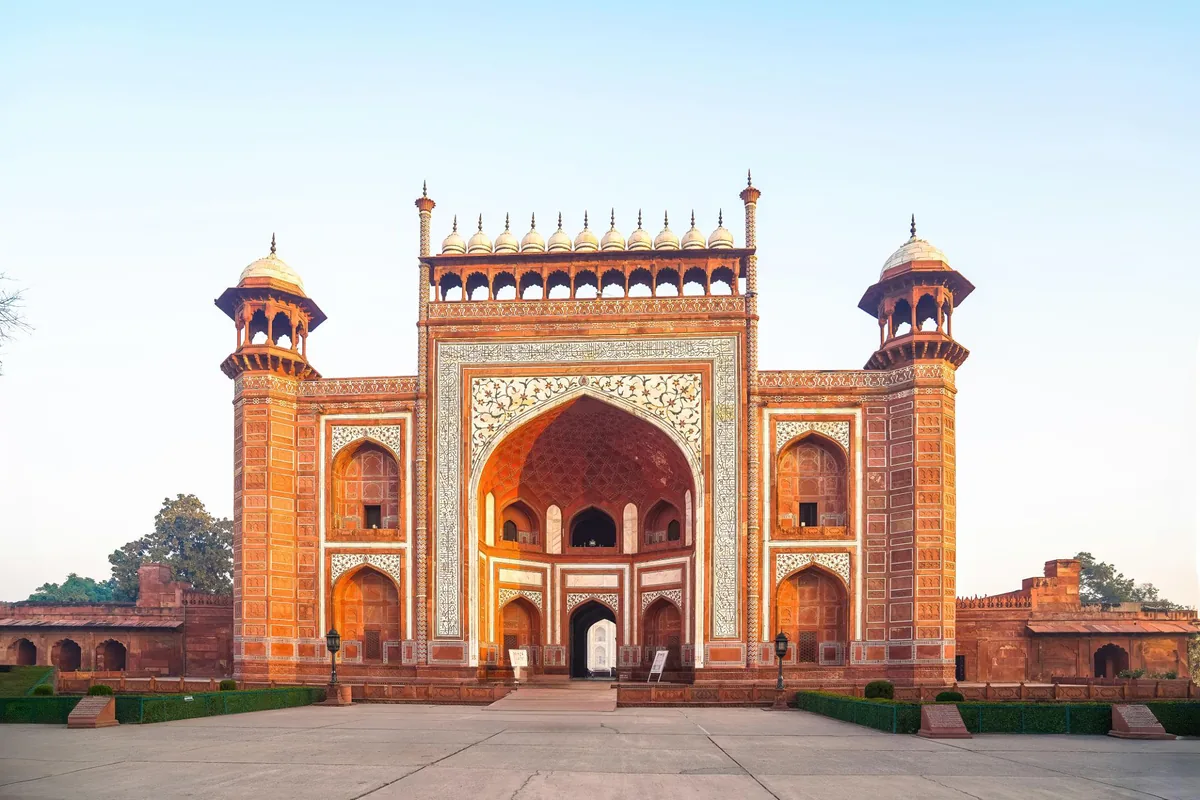
Some places are so famous you worry they cannot possibly live up to the photos. The Taj Mahal is not one of them. You round the great red gateway, the white marble comes into view, and the chatter around you goes quiet for a second. It is the rare wonder that feels bigger and more delicate in person than on any postcard, a tomb built out of grief that somehow reads as pure serenity. Getting there takes a little planning, though. There is the Friday closure to remember, two ticket tiers to understand, gates that work differently, and the small matter of beating the crowds. This guide walks you through all of it so you arrive ready, not flustered. Prices and times here are current ranges to plan around, not promises, so always confirm the latest on the official site before you go.
TL;DR
- The Taj Mahal sits in Agra, Uttar Pradesh, about a 3 to 4 hour drive or a 1 hour 40 minute fast train from Delhi.
- It is closed every Friday for prayers and open all other days, from roughly 30 minutes before sunrise to 30 minutes before sunset.
- Foreign tourists pay around 1,100 INR to enter the grounds, plus about 200 INR extra if you want to step inside the main mausoleum. Children under 15 enter free.
- Buy tickets online ahead of time to skip the counter queue and shave a little off the price. Use the official ASI portals only.
- Sunrise is the best time to visit by a mile: soft golden light, cool air, and far thinner crowds.
- Leave the big bags, tripods, and snacks at your hotel. Security is strict about what comes through the gate.
- The Taj pairs naturally with Agra Fort and the wider Golden Triangle of Delhi, Agra, and Jaipur.
- You will lean on your phone for tickets, maps, and e-tickets, so sort data first with the Best eSIM for India.
A quick history, and why it still stuns
The Taj Mahal was built in the 17th century by the Mughal emperor Shah Jahan as a mausoleum for his wife, Mumtaz Mahal, who died giving birth to their fourteenth child. What he raised in her memory took roughly two decades and the labor of thousands of artisans, and the result is widely held to be the high point of Mughal architecture. It is a UNESCO World Heritage Site and one of the most recognized buildings on earth.
What gets you in person is not just the scale but the detail. From a distance the marble looks plain white, but step closer and you see the surface is inlaid with semi-precious stones laid into floral patterns, and panels of flowing calligraphy framing the great arched doorways. The whole complex is built around symmetry, with a long reflecting pool, formal gardens quartered by water channels, and a mosque and a matching guest house flanking the tomb. The marble itself seems to change color through the day, blush pink at dawn, brilliant white at noon, soft gold at dusk. That shifting quality is exactly why the time you choose to visit matters so much.
Tickets and prices
There are two things to understand about Taj Mahal tickets, and once you have them the rest is simple.
First, foreigners and Indian citizens pay very different rates, which is normal for monuments across India. As a foreign tourist you can expect to pay in the region of 1,100 INR to enter the complex itself. Citizens of SAARC and BIMSTEC countries pay a reduced rate, and Indian nationals and OCI cardholders pay far less. Children under the age of 15 enter free regardless of where they are from.
Second, the entry ticket gets you into the grounds, the gardens, the reflecting pool, and right up to the platform, but it does not include going inside the main mausoleum where the cenotaphs rest. For that you pay an extra fee of roughly 200 INR, and it is optional. Plenty of visitors are happy admiring the building from the gardens and skipping the inner chamber, where photography is not allowed and the line can be slow.
You can buy at the ticket counters by the gates, but booking online beforehand is the smarter move. It trims a small discount off the foreigner price and, more importantly, it lets you walk past the counter queue and head straight for the security check. Use only the official Archaeological Survey of India channels, which the government Taj Mahal site links to directly. Avoid third-party resellers that tack on a markup, and double-check the current fees on the official site before you travel, since they do get revised.
| What you are paying for | Approximate cost (foreign tourist) | Notes |
|---|---|---|
| Entry to the complex and gardens | ~1,100 INR | Online booking shaves off a small discount |
| Main mausoleum (inner chamber) | ~200 INR extra | Optional, and the line can be slow |
| Children under 15 | Free | Both Indian and foreign |
| Opening hours | ~30 min before sunrise to ~30 min before sunset | Confirm sunrise time for your date |
| Closed | Every Friday | Open all other days |
Opening hours and the Friday closure
The single most important date rule is this: the Taj Mahal is closed every Friday. The mosque inside the complex is reserved for prayers that day, and general tourist entry is not allowed. If your Agra plans land on a Friday, switch your sightseeing to Agra Fort or another nearby site and save the Taj for a different morning. People miss flights' worth of excitement over this one, so put it in your calendar now.
On every other day the monument follows the sun rather than a fixed clock. It opens roughly 30 minutes before sunrise and closes about 30 minutes before sunset, which means the exact hours drift through the year. In summer that can mean an opening around 6am, while winter mornings open a touch later. Because the times move, check the sunrise hour for your specific date and aim to be at the gate before it. There are also separate, ticketed night viewing sessions on a handful of nights around the full moon each month, run on a different schedule and worth looking into if your dates happen to line up.
The best time to visit: sunrise
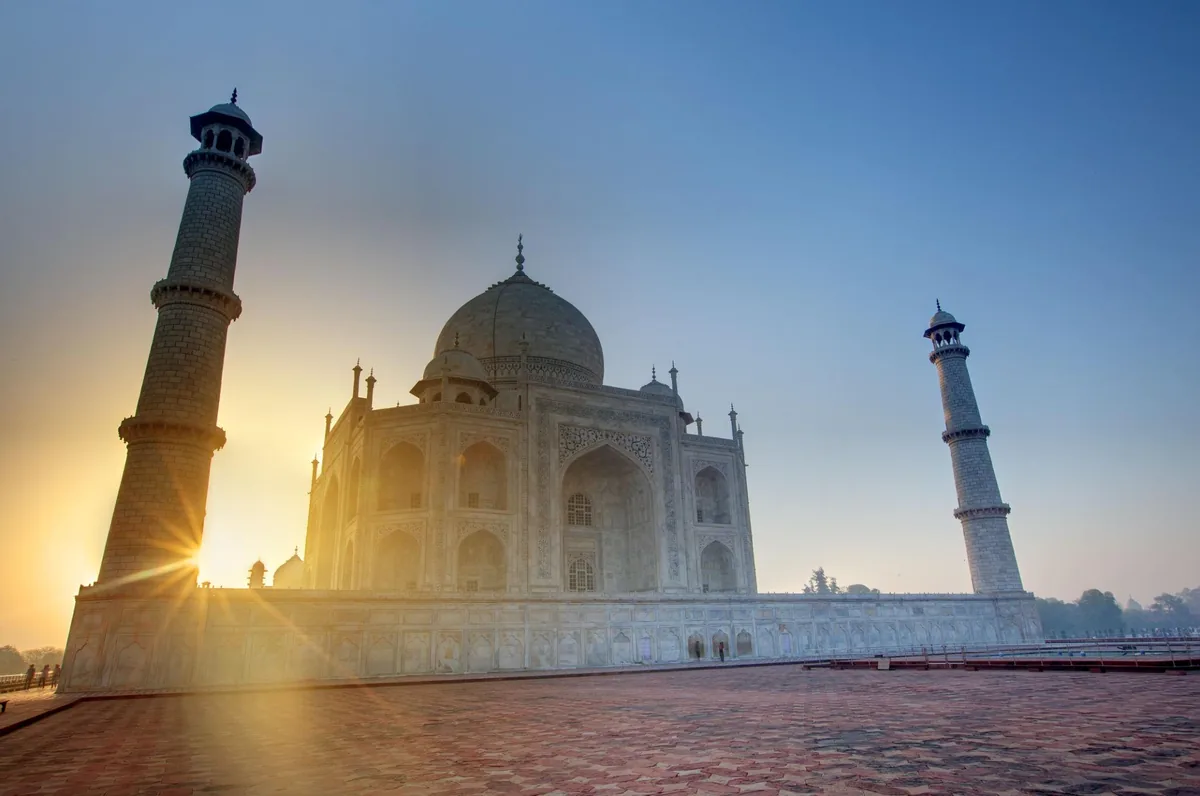
If you take one piece of advice from this whole guide, make it this one. Go at sunrise. Be at the gate before it opens, ticket already on your phone, and you are rewarded on every front.
The light is the obvious prize. As the sun comes up the marble glows pink and gold, the reflecting pool doubles the view, and the whole place looks like the version you imagined. But the real gift is space. By mid-morning the complex fills with tour groups and the iconic bench shots involve a patient queue. Arrive at opening and you get those first quiet minutes when the crowds are thin and the air is still cool, long before the midday heat sets in, which matters a great deal in an Agra summer.
There is a rhythm to a good sunrise visit. Be in the security line before the gate opens, because the queue forms early. The instant you clear it, go straight for the mausoleum view and reflecting pool and take your photographs first, while the gardens are nearly empty, then double back to wander at your own pace. Most people drift the other way and linger at the gate, which is exactly why moving fast pays off in those first twenty minutes.
Sunset is the second-best window, with its own warm glow, though it is busier than dawn and the marble turns a softer, more honeyed tone than the pink of morning. Try to avoid the middle of a weekend or a public holiday, when crowds and heat both peak. A weekday at first light is the sweet spot. If your schedule only allows a midday slot, do not despair: the building is staggering at any hour, and a hat, sunscreen, and water will see you through.
The best spots for photographs
Everyone arrives wanting the same picture, and knowing the spots in advance means you spend your quiet early minutes shooting rather than scouting.
The famous one is the bench, the marble seat on the central path with the mausoleum framed behind it. This is the Princess Diana shot, and at sunrise there is usually an orderly queue, so get in line early and be quick when your turn comes. Just behind it, the long reflecting pool gives the textbook symmetrical view, so crouch low on a still morning and let the water mirror the building. For something different, walk to the mosque on the western side and shoot through its shaded arches, framing the white marble against red sandstone. Detail shots of the inlaid flowers and calligraphy are worth as much as the wide ones.
The most magical angle is not inside the complex at all. Across the river sits Mehtab Bagh, a Mughal garden directly behind the Taj, and from its riverbank you get the building framed at a distance with the Yamuna in front of it. This is the classic sunset and golden-hour view, free of the crowds at the main gate. It is a separate, inexpensive ticket, and pairing a sunrise inside the complex with a sunset here gives you the Taj in two very different lights in one day.
How to get there from Delhi
Most visitors reach the Taj as a trip out from Delhi, and you have two good ways to cover the roughly 230 kilometers between them.
The fastest and easiest is the train. The Gatimaan Express, India's fast semi-high-speed service, runs from Delhi to Agra Cantonment station in about 1 hour 40 minutes, with comfortable reserved seating and onboard catering. The Shatabdi Express is another reliable option at around two hours. Both run daily except Friday, and both make a same-day return entirely doable: take an early train down, spend the day, and head back in the evening. Book your reserved seats ahead, as the good trains fill up. From Agra Cantt it is a short taxi or auto-rickshaw ride to the Taj.
The other route is by car along the Yamuna Expressway, a smooth tolled highway that gets you from Delhi to Agra in around 3 to 4 hours depending on traffic and exactly where you start. Hiring a car with a driver is popular because it gives you door-to-door flexibility and makes it easy to fold in Agra Fort or even Fatehpur Sikri on the way. It costs more than the train and takes longer, but the freedom suits travelers on a tighter sightseeing schedule. Either way, plan to leave Delhi early if you want to make that golden sunrise slot.
One thing the train and the car share is the last mile. Petrol and diesel vehicles are not allowed right up to the Taj, since the zone around it is kept low-emission to protect the marble from pollution. Your taxi drops you at a parking area a little way out, and you cover the final stretch on foot, by cycle-rickshaw, or on a small electric shuttle.
What you can and cannot bring
Security at the Taj is genuinely strict, and knowing the rules ahead of time saves you a frustrating wait at the gate. Travel light.
Leave the large bags, backpacks, and suitcases behind, as they are not allowed through and will slow your security check to a crawl. A small handbag is fine. Tripods, drones, and professional video cameras are not permitted, so a regular camera or your phone is the way to capture the place. Outside food, snacks, and drinks are banned, though a small transparent water bottle is usually allowed. Also leave behind anything along the lines of smoking items, lighters, and tobacco, since eating and smoking inside the complex is strictly prohibited.
A few more things tend to trip people up. Items like headphones, books, playing cards, and large electronics can get questioned at the gate, so the rule of thumb is simple: bring your phone, a regular camera, your ticket, and as little else as you can. There are cloakrooms and free lockers near the entrances, but it is far easier to leave the extras at your hotel. Men and women pass through separate security lanes, so empty your pockets before you reach the front.
One small perk surprises people: with a valid ticket you usually receive a complimentary bottle of water and a pair of shoe covers on the way in, so you do not need to bring your own.
The four gates, and which one to use
The complex is reached through more than one entrance, and picking the right one saves time and a longer walk. Three gates serve visitors, the West, East, and South, set around the outer wall, and they all feed into the same forecourt before the great red gateway that frames your first view of the marble.
The West gate is closest to the city and the busiest, which means the longest lines, especially at opening. The East gate sits nearer many of the hotels and tends to be calmer, so if your stay is on that side it is often the smoother choice. The South gate threads up through the old lanes of Taj Ganj, though it now functions mainly as an exit. Choose your gate by where you are staying or being dropped, get there before opening, and remember that all three lead to the same first reveal.
Touts, scams, and the photographer hustle
Anywhere this famous draws people who make a living from confused tourists, and the gates are where you will meet them. None of it is dangerous, and a friendly firm no handles almost all of it, but knowing the routines in advance keeps your morning calm.
The most persistent one is the photographer hustle. As you near the gate, someone may offer to be your "official" guide or photographer. There are genuine licensed photographers inside the complex with posted rates, and you can hire one if you like, but you are never required to, and anyone claiming to be official outside the gate is usually freelancing. Agree a price up front if you do want photos, and otherwise a polite no ends it.
Watch for a few other classics. The only tickets you should buy are from the official counters or site, never from someone in the street offering to skip the queue. Drivers sometimes push a detour to a "government emporium" where they earn a commission, so be clear about going straight to the gate. The reflex that always serves you best: keep walking, stay polite, and only ever pay at official points.
Dress, etiquette, and accessibility
The Taj Mahal is an active place of worship as well as a monument, and dressing with that in mind is both respectful and practical. There is no rigid dress code for the grounds, but modest, comfortable clothing that covers the shoulders and knees is the sensible call, both out of courtesy and because you will do a lot of walking in the sun. If you visit the mosque inside the complex, more conservative cover is expected and heads may need to be covered. Before you step onto the raised platform around the mausoleum you either remove your shoes or slip on the provided shoe covers, so wear something easy to take off, and inside the tomb chamber keep your voice low and do not touch the screens or cenotaphs.
On accessibility, the complex is more manageable than its grandeur suggests. The main pathways and gardens are broad and largely flat, wheelchairs can be arranged, and ramps are provided at the steps up to the platform so visitors with limited mobility are not shut out of the closest views. If someone in your group has mobility needs, ask at the gate about assistance.
Night viewing under the full moon
Beyond the daytime visit there is a rarer way to see the Taj. On a handful of nights each month, clustered around the full moon, the monument opens for special night viewing sessions under the moonlight, when the marble takes on a cool, silvery glow quite unlike the warm tones of day.
These sessions run on a separate, ticketed schedule, with limited numbers and viewing from a set vantage point rather than free run of the gardens. Because places are capped and the dates follow the lunar calendar, you usually need to arrange tickets ahead through the official channels. For anyone whose visit coincides with a full moon, it is a memorable addition.
Combining the Taj with Agra Fort and the Golden Triangle
The Taj deserves a couple of hours at least, but it is far from the only reason to be in Agra. A short distance away stands Agra Fort, a massive red sandstone fortress that was the main Mughal residence for generations and a UNESCO World Heritage Site in its own right. From its walls you can see the Taj shimmering across the river, and it was here that Shah Jahan reportedly spent his final years gazing at the tomb he had built. Pairing the two in a single day is the classic Agra itinerary, and the milky-white marble and red stone make a striking contrast.
Two more stops reward anyone with extra time. Itimad-ud-Daulah, affectionately known as the Baby Taj, is a smaller marble tomb across the river that predates the Taj Mahal and is often called its draft, with delicate inlay and lattice screens thought to have influenced the masterpiece that followed. It draws a fraction of the crowds, and it sits close to Mehtab Bagh, so the two pair neatly into a quiet half-day on the far bank of the Yamuna. Further out, about an hour from town, lies the abandoned imperial city of Fatehpur Sikri, a well-preserved Mughal capital of red sandstone palaces and a great mosque, raised by Akbar and then left behind. It slots easily into the drive to or from Delhi by road.
Zoom out and Agra is one corner of the Golden Triangle, the most popular travel circuit in northern India. The triangle links Delhi, Agra, and Jaipur, three cities each loaded with their own history and architecture, and the loop is named for the rough triangle they form on the map. A typical run does a few days in Delhi, a day or two around the Taj and Agra Fort, then on to Jaipur for its palaces and forts, all connected by good roads and trains. If this is your first trip to India, it is a hard route to beat, and the Taj is its undisputed centerpiece.
The bottom line
The Taj Mahal earns every bit of its fame, and a little forward planning is all that stands between you and a smooth visit. Remember the Friday closure, book your tickets through the official site ahead of time, and set an early alarm so you are at the gate for sunrise. Decide in advance whether you want the inner-mausoleum add-on, pack light for security, and the morning unfolds easily from there.
Almost all of that running starts on your phone. You will book and store your e-ticket on it, pull up the train times and your taxi to the gate, follow the map through an unfamiliar city, and check the sunrise hour for the day. None of that works without data, and switching on roaming for it is an expensive way to find out. A travel eSIM connects you to a local Indian network the moment you land, with no SIM swap at the airport and no surprise bill waiting at home. Our guide to the Best eSIM for India covers coverage, how much data you actually need, and a setup that takes only a few minutes. Sort it before you fly and you step off the plane already connected, ready to focus on the marble instead of the logistics.
Frequently asked questions
How much does it cost to visit the Taj Mahal as a foreigner?
As a foreign tourist you can expect to pay around 1,100 INR to enter the complex and gardens, plus roughly 200 INR extra if you want to go inside the main mausoleum, which is optional. Children under 15 enter free. Booking online through the official Archaeological Survey of India portal trims a small discount off the foreigner price, and you should always confirm the current fees on the official site before you travel.
What days is the Taj Mahal closed?
The Taj Mahal is closed every Friday for prayers at the mosque inside the complex, and tourist entry is not permitted that day. It is open every other day of the week. There are also separate ticketed night viewing sessions on a few nights around each full moon, run on a different schedule.
What time should I arrive at the Taj Mahal?
Aim to be at the gate before it opens, which is roughly 30 minutes before sunrise. Sunrise is by far the best time to visit, with the softest light, the coolest air, and the thinnest crowds before the tour groups arrive. The exact opening time shifts through the year because it follows the sun, so check the sunrise hour for your specific date.
How do I get to the Taj Mahal from Delhi?
The quickest way is the train: the Gatimaan Express reaches Agra Cantonment in about 1 hour 40 minutes, and the Shatabdi Express takes around two hours, both running daily except Friday. By car, the Yamuna Expressway gets you there in roughly 3 to 4 hours. Many travelers hire a car with a driver for door-to-door flexibility and to fit in Agra Fort on the same day.
What can't you bring into the Taj Mahal?
Large bags, backpacks, tripods, drones, and professional video cameras are not allowed, and outside food, snacks, smoking items, and tobacco are banned. A small handbag, a regular camera or phone, and a small transparent water bottle are generally fine. Photography is not permitted inside the main mausoleum, though it is allowed elsewhere in the grounds.
Can you go inside the Taj Mahal?
Yes. The standard entry ticket gets you into the grounds and right up to the platform, and for an extra fee of around 200 INR you can step into the main mausoleum to see the cenotaphs. It is optional, photography is not allowed inside, and the queue can be slow, so many visitors are happy admiring the building from the gardens.
Is the Taj Mahal worth visiting as part of the Golden Triangle?
Absolutely. The Taj is the centerpiece of the Golden Triangle, the classic circuit linking Delhi, Agra, and Jaipur. Pairing it with nearby Agra Fort makes for a full and rewarding day, and the wider loop gives first-time visitors a strong introduction to northern India's history and architecture.
Where is the best place to photograph the Taj Mahal?
The classic shot is from the marble bench on the central path, with the reflecting pool giving you the symmetrical mirror view on a still morning. For something different, shoot from the mosque on the western side to frame the white marble through red sandstone arches. The most famous distant view is from Mehtab Bagh, the garden across the river, which is the prime sunset spot and far quieter than the main gate.
Convinced?
Try Esim70 — plans from $1.36/day
150+ countries · Instant delivery · No commitment.