Dubai Desert Safari 2026: Dune Bashing & What to Wear

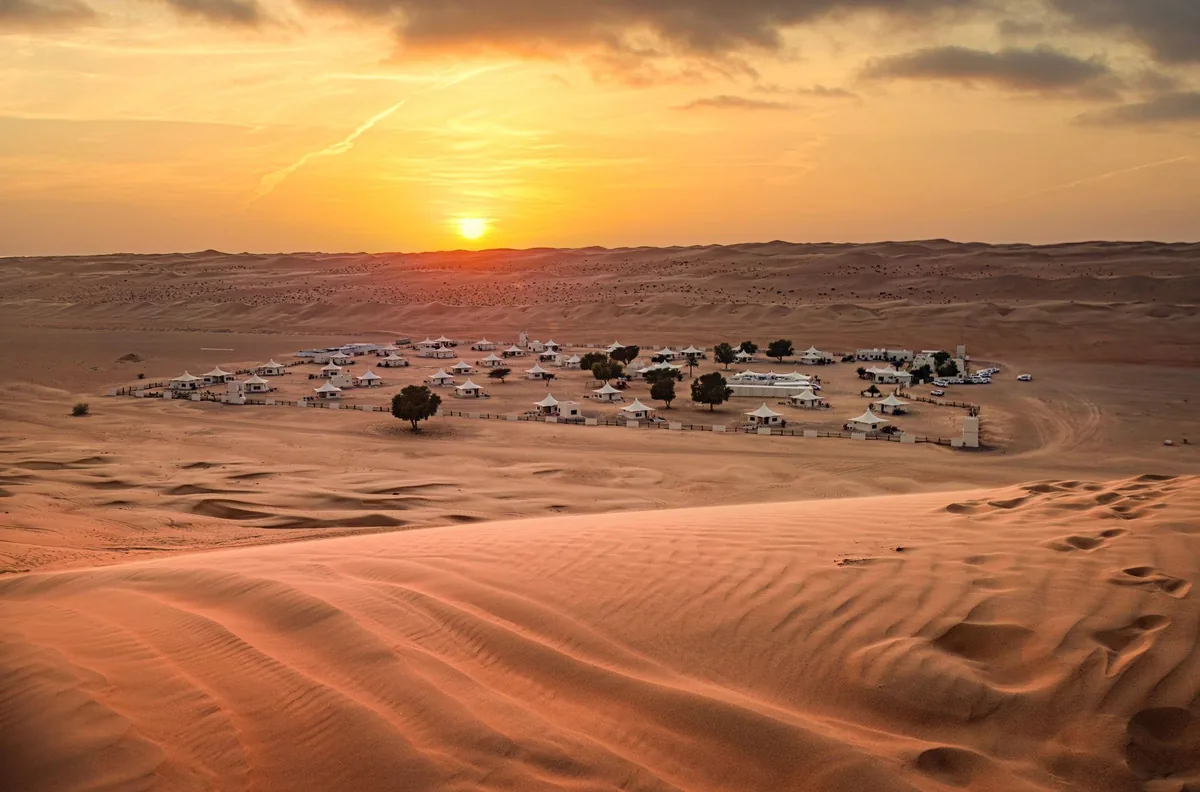
There's a moment on a Dubai desert safari that you'll keep coming back to. The city skyline has dropped out of view, the tarmac has turned to red sand, and your driver tilts the 4x4 over the crest of a dune so steep your stomach lifts. Then the engine settles, the doors open, and you step out onto a ridge of cooling sand to watch the sun melt into the horizon. It is touristy. It is also one of the genuinely great things you can do in the UAE, and almost everyone who goes comes back grinning.
The catch is that "desert safari" covers a huge range of experiences, from a 30 AED group seat in a shared vehicle to a private vintage Land Rover tour with a falconry display and a chef. Pick the wrong one and you spend the afternoon herded between photo stops. Pick the right one and you get a memory that outlasts the trip. This guide walks you through the morning, evening, and overnight options, what's actually included, what to wear, whether the dune driving will make you queasy, and how booking and hotel pickup really work in 2026.
TL;DR
- Evening safaris are the classic choice. You get dune bashing, a desert camp, a BBQ buffet dinner, and live shows (belly dance, tanoura, fire), usually over 6 to 7 hours including hotel pickup.
- Morning safaris are shorter, cooler, quieter, and more about the driving and the dunes than the dinner and entertainment.
- Overnight safaris add camping under the stars, a sunrise, and breakfast, running up to around 18 hours.
- Rough 2026 prices: shared morning from about 100 to 150 AED (roughly 27 to 41 USD), shared evening from about 100 to 250 AED (27 to 68 USD), overnight from around 350 to 700 AED+ (95 to 190 USD). Premium and private tours run much higher. Always check current operator pricing.
- Wear light, breathable layers and closed shoes. Evenings genuinely get cool, especially October to April.
- Best time to go is roughly October through April, when desert temperatures are pleasant rather than punishing.
- Booking online is usually cheaper than the counter and locks in your slot, and hotel pickup is standard.
Morning, evening, or overnight: which should you pick?
The single biggest decision is when you go, because it changes the whole character of the day.
An evening safari is what most people mean when they say "desert safari," and for good reason. A 4x4 collects you from your hotel in the afternoon, you do your dune bashing as the light softens, then you arrive at a desert camp for the full spread: camel rides, sandboarding, henna, Arabic coffee and dates, shisha, a barbecue buffet, and a stage of live entertainment. It is social, it is full, and it packs the most into one ticket. Plan for 6 to 7 hours door to door.
A morning safari is the quieter, more active counterpart. It is shorter, usually 4 to 5 hours, and it leans into the driving, the sandboarding, and the scenery rather than the dinner and the dance shows. You're out before the heat builds and back before lunch, which is perfect if you have something else booked for the afternoon or you simply prefer cool air and soft early light to a crowded camp at night. If your priority is the dunes themselves and good photos without the party, this is the one.
An overnight safari is the deep version. You stay out in a Bedouin-style camp, eat dinner, sleep under a sky full of stars far from the city's light, wake for a sunrise camel trek, and have breakfast before heading back. It can run close to 18 hours all in. It costs more and asks more of you, but it is the closest a standard tour gets to feeling like real desert life.
There is a quieter trade-off hiding inside this choice that people rarely think about until they are standing on the sand. An evening safari times your dune bashing for the golden hour, so you get the dramatic light most of us picture, but the camp itself can be loud and busy once the shows start. A morning safari gives you the dunes almost to yourself, but the sunrise window is brief and you trade the dinner and the festive atmosphere for it. Overnight sits in between in an odd way: you get both ends of the light, the sunset and the sunrise, plus the rare stillness of a desert night, but you also commit a full day and a night to it and you sleep somewhere far more basic than your hotel bed. If you only have one evening free in a packed Dubai itinerary, the classic evening trip is the safe pick. If the desert itself is the reason you came, the overnight is worth rearranging your plans for.
Quick comparison
| Factor | Morning safari | Evening safari | Overnight safari |
|---|---|---|---|
| Typical length | ~4 to 5 hours | ~6 to 7 hours | Up to ~18 hours |
| Temperature | Cool, comfortable | Warm into cool evening | Cool nights, can get cold |
| Crowds | Smallest | Largest | Small |
| Dinner & live shows | Usually not | Yes (BBQ buffet, belly dance, tanoura, fire) | Yes, plus breakfast |
| Camping & stargazing | No | No | Yes |
| Best for | Photos, dune action, early risers | First-timers, the full package | A standout, slower experience |
| Rough price (per adult) | ~100 to 150 AED | ~100 to 250 AED | ~350 to 700 AED+ |
Prices are indicative for 2026 and move with season and inclusions. Check current operators before you book.
How to choose a reputable operator
The single thing that separates a great safari from a forgettable one is the company you book with, and the gap between the best and the worst is wider than the price suggests. There are hundreds of operators competing for your booking in Dubai, and many of the cheapest listings are resellers who pass you to whichever vehicle has a spare seat. That is not always a problem, but it does mean you have less control over the driver, the camp, and the schedule than the glossy photos imply.
Start with reviews, but read them properly. A high star rating built on three reviews tells you almost nothing. Look for an operator with a long track record and hundreds of recent reviews, then read the one and two star ones specifically, because that is where the real pattern shows up: late pickups, vehicles that felt unsafe, hidden charges sprung at the camp, or shows that were cut short. Photos uploaded by other travelers are more honest than the marketing gallery, so scroll those too.
When you message or call before booking, a few direct questions sort the serious operators from the rest. Ask exactly what is included and what costs extra at the camp, so there are no surprises when you arrive. Ask how many people share one 4x4 and how big the camp gets at peak times, since "small group" means different things to different companies. Ask whether they hold the relevant tourism licensing and whether their drivers are trained for dune driving specifically, not just regular roads. Ask what happens if the weather turns or you need to cancel. And ask whether their permits cover a protected conservation area or a general open-desert site, because that shapes both the scenery and the crowd. An operator that answers these clearly and without irritation is usually one worth trusting. One that dodges them is telling you something.
What's actually included
Inclusions vary a lot by package and price, so read the listing carefully rather than assuming. That said, here is what you'll commonly find.
Almost every safari includes dune bashing in a 4x4 Land Cruiser, hotel pickup and drop-off, sandboarding, a short camel ride, soft drinks, and a desert camp stop. Evening and overnight tours add the BBQ buffet dinner, usually with Arabic, continental, and vegetarian options, plus live entertainment: a belly dance set, a spinning tanoura performance, and often a fire show. Camps typically throw in lighter touches too, like henna painting, shisha, Arabic coffee and dates, and the chance to pose for photos in traditional dress.
A few things tend to cost extra. Quad biking and dune buggy rides are usually add-ons rather than part of the base price. A short falconry display is included at some camps and a premium feature at others. Alcohol, if available, is generally not included. And VIP touches, like private seating, table service, or a private vehicle, push the price up. If a deal looks unusually cheap, it is often because the headline activities you actually want are billed separately.
It helps to know where the upsells tend to appear, because the cheaper your base ticket, the more of them you will meet. The henna and the dress-up photos are usually free, but a professional print or a framed shot often is not. The camel ride included in your package is typically a short loop around the camp; a longer trek into the dunes costs more. Quad bikes are sold by the slot at the camp itself, and the queue can be long at peak times, so if you really want one, ask whether you can pre-book it. Drinks beyond the basic soft drinks and water, sandboard upgrades, and "premium" seating with better food and a closer view of the stage are all common extras. None of this is a scam, but it adds up, and the camp is not the moment you want to discover that the experience you pictured costs another few hundred dirhams. The fix is simple: read the inclusions line by line before you pay, and assume that anything not explicitly listed is either unavailable or extra.
Dietary needs at the BBQ
The barbecue dinner is a highlight of any evening or overnight safari, and the good news is that it usually caters to a wide range of eaters without much fuss. The food in the UAE is almost universally halal, so Muslim travelers can relax on that front; it is the default rather than a special request. The buffet typically runs the gamut from grilled meats and kebabs to rice, salads, breads, hummus, and grilled vegetables, with fruit and sweets to finish.
Vegetarians are generally well looked after, since the spread leans heavily on salads, vegetable dishes, breads, and rice. Vegans can usually piece together a decent plate from the same options, though dedicated vegan dishes are not guaranteed, so it is worth flagging in advance. The bigger thing to watch is allergies and stricter requirements. A camp buffet is a shared, busy environment where cross-contamination is hard to rule out, and the staff serving you may not know every ingredient. If you have a serious allergy, are strictly gluten free, or follow a kosher or other specific diet, tell the operator clearly when you book and again when you arrive, and do not assume the buffet labels will be detailed. Bringing a few of your own safe snacks is a sensible backup if your needs are strict. For children who are fussy eaters, the rice, bread, fruit, and grilled chicken are usually safe bets, and most camps are happy to accommodate a simple plate.
What to wear and what to bring
The desert is hot by day and surprisingly cool after dark, so dress in layers you can add and shed.
Go for light, breathable clothing in cotton or linen, and bring a light jacket or scarf for the evening, because once the sun drops the temperature can fall fast, especially between October and April. Closed shoes are smarter than sandals; sand gets everywhere, it can be hot underfoot, and quad bikes and sandboarding are easier with covered feet. Daytime essentials are sunglasses, sunscreen, and a hat. A scarf doubles as sun and wind protection and is handy if the breeze kicks up sand.
A couple of practical notes. Dubai is fairly relaxed at desert camps, but it is still respectful to keep shoulders and knees covered, and a light scarf is useful for women who want extra coverage at the camp. Bring a power bank, because you will be filming and photographing far more than you expect and there are few places to charge. And keep your phone in a pocket or bag during dune bashing rather than your hand, unless you want to watch it bounce around the cabin.
A few more things earn their place in your bag once you know to pack them. Wet wipes or hand sanitizer are worth their weight, because fine sand finds its way onto your hands, your face, and everything you eat, and the camp facilities are basic. Bring a little cash in dirhams for tips, drinks, and any add-ons you decide on at the camp, since card machines are not always reliable out there. If you wear contact lenses, pack a spare pair or your glasses, as blowing sand and lenses do not mix well. A small towel or sarong is handy to sit on at the camp and to keep sand off your clothes. And if you are going in the cooler months, do not underestimate how much the temperature drops after dark; a proper layer rather than a token cardigan can be the difference between enjoying the evening shows and shivering through them. Leave anything you would hate to lose at the hotel. Sand, dune bashing, and a busy camp are not kind to delicate jewelry, loose earrings, or anything that can slip out of a pocket.
Is dune bashing safe, and will it make you sick?
Dune bashing is the part people are most nervous about, and the honest answer is that it is exhilarating and generally safe, but it is not gentle.
Reputable operators use experienced drivers and well-maintained 4x4s, lower their tire pressure for grip on the sand, and run routes they know. You'll be belted in. The ride itself is a series of climbs, drops, and sideways slides across the dunes, a bit like an off-road rollercoaster. For most people that's the highlight. If you have a heart condition, back or neck problems, you're pregnant, or you're traveling with very young children, it is worth checking with the operator and your doctor first, since the jolting can be intense.
On motion sickness: if you're prone to it, a few simple steps help a lot. Avoid eating a heavy meal in the 2 to 3 hours before the ride. Consider a non-drowsy motion sickness tablet beforehand. During the drive, fix your eyes on a distant point on the horizon rather than the sand rushing past. And here's the most useful tip of all: tell your operator when you book, ask for a gentler ride, and request a front seat, where the movement is less pronounced. Good drivers will happily dial down the intensity if you ask.
Is it right for families, kids, and travelers with health concerns?
A desert safari can be a wonderful family outing, but the version you book matters. Most camps are genuinely fun for children: sandboarding, camel rides, henna, dressing up, and running around on the dunes tend to delight kids, and the buffet has plenty of plain options for picky eaters. The part to think hard about is the dune bashing. The jolting, sliding ride that adults find thrilling can frighten or unsettle very young children, and operators often set minimum age guidance for it for good reason. If you are traveling with toddlers or babies, ask whether you can take a gentler route or skip the hard dune driving and go straight to the camp, which many companies will arrange. A morning safari, with its calmer pace and cooler air, can suit families with young children better than a long, late evening that runs past bedtime.
If you are pregnant, the standard advice is to skip the dune bashing entirely. The sudden drops, jolts, and lateral slides are exactly the kind of movement to avoid, particularly in later pregnancy, and no sunset photo is worth the risk. The good part is that you do not have to miss out completely. Many operators can arrange a smoother arrival at the camp so you can still enjoy the dinner, the shows, and the atmosphere without the rollercoaster section. Talk to the company in advance and to your own doctor, and let both guide the decision.
The same caution applies if you have back or neck problems, a heart condition, or recent surgery. Dune bashing puts real, repeated stress on the spine and is not something to power through if your back is fragile. Ask for a gentle ride, sit in the front where the motion is less violent, and be honest with the driver about your limits. If in doubt, a morning or overnight camp experience without aggressive driving still gives you the desert, the camel ride, the food, and the scenery, just without the part that hurts. The desert rewards travelers who match the trip to their own body rather than the one in the brochure.
How to book and how pickup works
Booking is easy, and you have a few routes. You can book directly with a tour operator, through your hotel concierge, or via an online booking platform. Booking online ahead of time is usually 10 to 20 percent cheaper than buying at a counter, and it lets you lock in your preferred date and slot, which matters in the busy winter months when popular tours sell out.
Hotel pickup is the standard model. When you book, you give your hotel name or location, and a driver collects you in the 4x4 at an arranged window, often with a small spread of pickup times rather than an exact minute. They drop you back at the end. This is why it helps to have the safari confirmed and your details squared away before you arrive, so the operator can reach you about timing.
Before you pay, sanity-check three things: whether the activities you care about (dune bashing, dinner, any add-ons) are included or extra, whether pickup covers your specific area, and what the operator's reputation looks like in recent reviews. A slightly pricier tour with a great safety record and real reviews beats a rock-bottom deal that nickel-and-dimes you on the day.
Best time of year to go
The desert is a year-round activity, but the season makes a real difference to how much you enjoy it.
The sweet spot is roughly October to April, when daytime desert temperatures sit in a comfortable range and the evenings are pleasant. This is peak tourist season, so it is also when prices run highest, often 15 to 25 percent above summer rates, and when you most need to book ahead. The shoulder months around October and April can offer the best balance of decent weather and slightly softer pricing.
Summer (June to September) is cheapest, but desert temperatures can climb to 40 to 45°C, which makes a daytime safari genuinely uncomfortable. If you travel in summer, lean toward an evening or overnight safari and go easy in the heat. Whenever you go, sunrise and sunset are the magic windows, when the low light turns the dunes deep orange and the photos almost take themselves.
Animals and responsible safaris
Camel rides and falconry are part of the appeal for many travelers, and you can enjoy both while still being thoughtful about the animals involved. The two things worth thinking about are how the animals are treated and which operators take that seriously.
For camel rides, look at the animals themselves when you arrive. Healthy camels look well fed, are not made to carry too many riders at once, and are given breaks and shade rather than walking loops in the harshest heat all day. A short, gentle ride at a sensible pace is very different from a tired animal worked nonstop. If something looks off, you are free to skip the ride and just enjoy the rest of the camp. Falconry sits in a more complicated place. Falconry has deep, genuine roots in Emirati and Bedouin heritage, and a well-run demonstration with a knowledgeable handler can be a real window into that tradition. The flip side is that some camps treat the birds as a quick photo prop. The more reputable, conservation-minded operators tend to present falconry as education rather than a gimmick, which is one more reason their tours cost more.
More broadly, the most responsible way to experience the desert is to choose operators who respect the environment they are profiting from. That means sticking to established tracks rather than tearing up untouched dunes, taking litter back out, and, at the premium end, supporting tours that run inside protected reserves where the landscape and its wildlife are actively managed. You do not have to turn the trip into a lecture to yourself. Just lean toward the operators who clearly care, treat the animals as living creatures rather than attractions, and leave the desert as you found it.
What an overnight stay adds
If you are weighing whether the longer, pricier overnight trip is worth it, it helps to know what you actually gain beyond a place to sleep. The first thing is the sky. Far from the city's glow, the desert at night is genuinely dark, and on a clear night the number of stars overhead is the kind of thing city dwellers forget exists. That alone is reason enough for many people. The second is the silence. Once the day groups have left and the camp winds down, the desert goes quiet in a way that is hard to find anywhere near a major city, and sitting out by a fire in that stillness is the part of the experience guests tend to remember most.
You also get both ends of the light without rushing. A sunset arrival, a slow evening, a night under the stars, and then a sunrise that paints the dunes in soft pink and gold before the heat arrives. The sunrise camel trek, when it is included, is calm and unhurried in a way the busy evening camp simply cannot be. The trade-offs are real, though. Overnight camps are comfortable but basic, the nights can get genuinely cold in winter, and you are committing the better part of a day and a night to one activity. If your idea of a holiday is a long hot shower and your own bed, the overnight will test you. If the thing you want most is the desert itself, on its own terms, it delivers something the day trips cannot.
Photographing the dunes and the sunset
The desert is one of the most photogenic places you will visit in the UAE, and a few habits will lift your shots well above the usual blurry phone snaps.
The light does most of the work, so shoot during the golden hour around sunrise and sunset, when the low sun rakes across the dunes and throws long, dramatic shadows that show off every ridge and ripple. Midday light is flat and harsh by comparison, washing the sand out. Get low to the ground to make the dunes loom larger and the ripples in the sand lead the eye into the frame, and look for clean, unwalked dunes rather than ones already churned up by footprints and tires. A lone figure, a camel, or a single vehicle on a ridge gives the vast emptiness a sense of scale that an empty dune lacks.
A handful of practical points matter more in the desert than almost anywhere else. Fine sand is the enemy of camera gear, so avoid changing lenses out in the open, keep your phone or camera in a bag between shots, and give everything a gentle wipe afterward. The contrast between bright sky and shadowed sand can fool automatic exposure, so it is worth tapping to expose for the sand and letting the sky go a touch brighter, or shooting a few versions and choosing later. For the dune bashing itself, video beats stills, and a short clip of the 4x4 cresting a dune captures the feeling far better than a still ever will, just keep the phone secured. And for the classic silhouette shot, position your subject on a ridge with the setting sun behind them and expose for the sky. The desert is forgiving for beginners precisely because the scenery is so strong, but these small moves are what turn a nice photo into one you will actually print.
Tipping at the camp
Tipping is not formally required on a Dubai desert safari, but it is customary and genuinely appreciated, and a little planning saves an awkward fumble at the end. The main person to consider is your driver, who is also usually your guide for the afternoon. If they drove well, kept you safe, adjusted the ride when asked, and were good company, a tip is a normal way to say thanks. Camp staff who serve dinner and the performers who entertain you may also have a tip box, and rounding up for good service is welcome rather than expected.
Two practical notes make this easier. First, carry a little cash in dirhams, because tips are almost always cash and there is no card machine for it out in the desert. Decide roughly what you want to give before you go so you are not doing mental arithmetic in the dark. Second, tip in proportion to the service and your budget rather than to any fixed rule; there is no set percentage for a tour like this, and a genuine thank you with a modest amount lands better than an obligation grudgingly met. If the service was poor, you are under no pressure to tip, but in practice most travelers find the experience well worth a small gesture of thanks.
Private versus shared safaris
Beyond the morning, evening, and overnight choice, there is a parallel decision that shapes the day just as much: whether you share the experience with strangers or pay for a private one. Both can be excellent, and the right answer depends on who you are traveling with and what you want out of it.
A shared safari puts you in a 4x4 with other travelers and at a camp alongside many more. It is the cheaper, more sociable option, and the buzz of a full camp with shows and a crowd is part of the classic experience that plenty of people specifically want. The trade-offs are that you follow a fixed schedule, you share the vehicle and the dune ride, and the camp can feel busy and a little processed at peak times. For solo travelers, couples on a budget, and anyone who enjoys a lively atmosphere, shared safaris are great value.
A private safari gives you your own vehicle, your own driver, and far more control over the pace and the route. You can ask to spend longer at the photo stops, take a gentler or wilder ride to suit your group, and avoid the crush of a packed camp. This suits families with young children, groups of friends who want to stick together, travelers with specific needs around diet, mobility, or motion sickness, and anyone celebrating something special. At the top end, private tours into protected reserves swap the festive camp for quiet, expert-guided drives and refined dining. The catch is simply cost, since you are paying for the whole vehicle and a tailored experience rather than a seat. A useful way to decide: if the people you are with are the point, go private; if meeting people and saving money is part of the fun, go shared.
Premium versus budget options
The price spread on desert safaris is enormous, and it pays to know what you're really comparing.
At the budget end, you'll see shared group safaris advertised from as little as 30 to 100 AED. These can be great value and genuinely fun, but you're sharing a vehicle and a busy camp, the schedule is fixed, and the headline extras are often billed on top. They suit travelers who want the experience without the spend.
At the premium end sit private and heritage tours, including experiences inside the protected Dubai Desert Conservation Reserve. Instead of a packed camp, these lean toward small-group nature drives in vintage Land Rovers, expert guides talking you through the desert's wildlife and plants, falconry demonstrations, and refined dining, sometimes a gourmet breakfast at a desert resort. They cost considerably more, often running into four figures in AED, but they trade the party atmosphere for space, quiet, and a stronger sense of the real desert. Between the two extremes, plenty of mid-range and VIP packages add private seating, better food, or a private vehicle for your group. Decide which you value more, the buzz of a big camp or the calm of a small one, and let that steer your budget.
The bottom line
A Dubai desert safari is one of those rare tourist staples that lives up to the hype, whether you go for a quiet morning of dune driving or a full evening of dinner and dancing under the stars. Pick your timing first, read the inclusions closely, dress in light layers with closed shoes, and book online ahead of your trip to save money and lock in your slot.
The one thing that quietly underpins all of it is a working data connection. You'll book and confirm online, coordinate the exact pickup window with your driver by message or call, pull up your voucher, and almost certainly send a stream of dune-bashing videos and sunset photos to everyone back home before you've even reached the camp. Doing that on a travel eSIM means you're connected the moment you land at DXB, with no roaming bill and no hunting for a local SIM. If you want the full rundown on coverage, data amounts, and the UAE's calling-app quirks, see our Best eSIM for Dubai guide before you fly. Sort the connectivity once, then the only thing left to plan is which dune to watch the sunset from.
Frequently asked questions
Which is better, a morning or evening desert safari?
It depends on what you want. Choose evening if you want the full package, with a BBQ dinner, live shows, and the classic sunset-over-the-dunes experience. Choose morning if you'd rather have cooler air, smaller crowds, great light for photos, and a shorter, more active outing focused on the driving and the dunes. First-timers usually love the evening; repeat visitors and photographers often prefer the morning.
How much does a desert safari in Dubai cost in 2026?
Roughly, shared morning and evening safaris start somewhere around 100 to 250 AED per adult (about 27 to 68 USD), while overnight safaris start from around 350 to 700 AED or more (about 95 to 190 USD). Private and premium tours run much higher, sometimes into four figures. Prices rise in peak winter season and with add-ons like quad biking, so always check current operator pricing before booking.
Is dune bashing safe?
With a reputable operator it is generally safe. Drivers are experienced, vehicles are maintained, and you're belted in. That said, it is a bumpy, intense ride. If you're pregnant, have heart, back, or neck issues, or are traveling with very young children, check with the operator and your doctor first, and ask for a gentler ride if you'd prefer one.
What should I wear to a desert safari?
Light, breathable clothing in cotton or linen, closed shoes rather than sandals, and sunglasses, sunscreen, and a hat for the daytime. Bring a light jacket or scarf for the evening, because the desert cools down quickly after sunset, especially from October to April.
Does the safari include hotel pickup?
Yes, in almost all cases. Hotel (or location) pickup and drop-off in a 4x4 is the standard model. You provide your hotel details when booking, and the driver collects you within an arranged time window and returns you afterward. Confirm that pickup covers your specific area before you pay.
When is the best time of year to go?
October to April offers the most comfortable desert temperatures and the best overall experience, though it's also peak season with higher prices and more demand. Summer (June to September) is cheaper but very hot, often 40 to 45°C by day, so an evening or overnight safari is the more comfortable choice in those months.
Can I avoid motion sickness during dune bashing?
Often, yes. Don't eat a heavy meal in the 2 to 3 hours beforehand, consider a non-drowsy motion sickness tablet, and keep your eyes on a fixed point on the horizon during the ride. Tell your operator when you book that you're prone to it, ask for a front seat, and request a gentler drive. Good drivers are happy to adjust.
Is the food halal, and can the BBQ handle dietary needs?
Yes, the food on Dubai safaris is almost always halal by default, so that is not something Muslim travelers need to arrange. Vegetarians are generally well catered for thanks to the salads, breads, rice, and vegetable dishes, and vegans can usually piece together a plate, though it helps to flag it in advance. For serious allergies, strict gluten free, or kosher requirements, tell the operator clearly when you book and again on arrival, since a busy buffet makes cross-contamination hard to rule out. Carrying a few of your own safe snacks is a sensible backup.
Should I book a private or a shared safari?
It depends on your group and budget. Shared safaris are cheaper and more sociable, with the lively, full-camp atmosphere many first-timers want, but you follow a set schedule and share the vehicle. Private safaris cost more but give you your own 4x4 and driver, control over the pace and route, and a calmer experience, which suits families with young kids, groups who want to stay together, anyone with specific dietary or mobility needs, and special occasions. If the people you're with are the point, go private; if meeting others and saving money appeals, go shared.
How much should I tip on a desert safari?
Tipping isn't required but is customary and appreciated, especially for your driver-guide if they drove well and looked after you. Camp staff and performers may also have tip boxes. There's no fixed percentage, so tip in proportion to the service and your budget, and carry a little cash in dirhams, because tips are almost always cash and there's no card machine out in the desert.
Convinced?
Try Esim70 — plans from $1.36/day
150+ countries · Instant delivery · No commitment.