How to Visit Chichén Itzá in 2026: Tickets & Tours

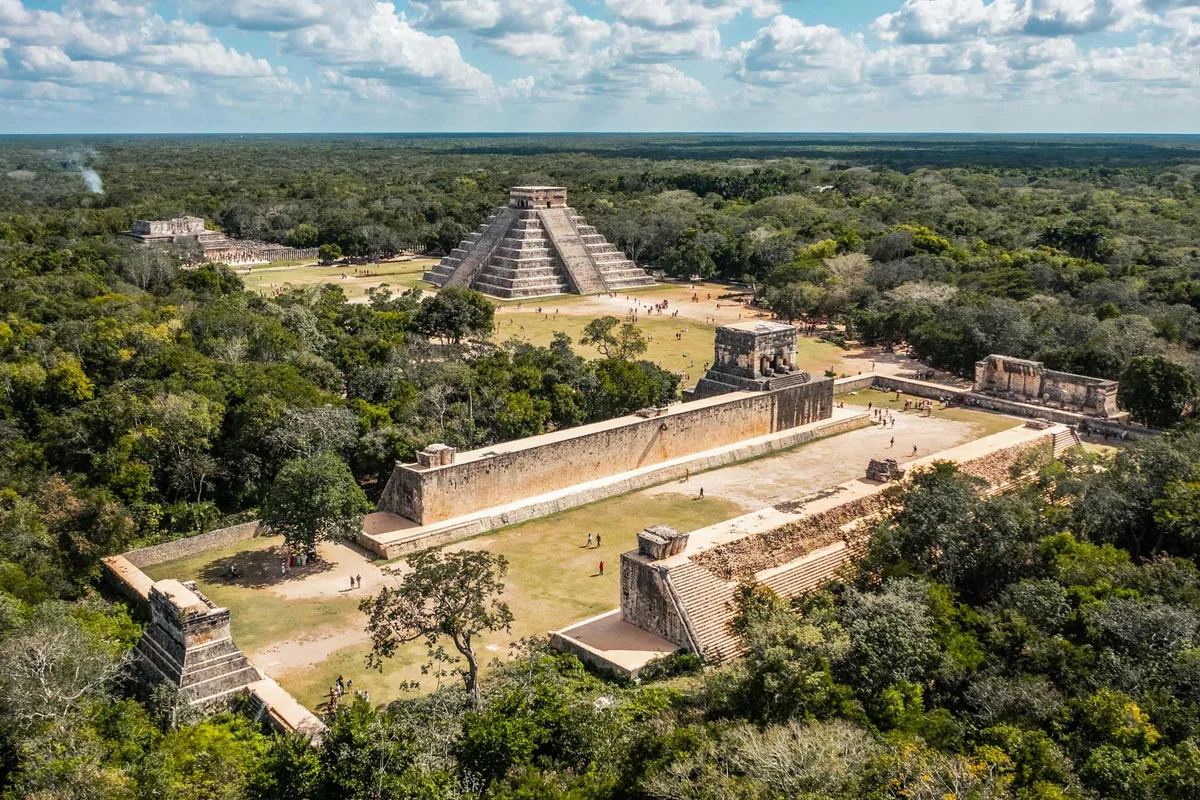
There is a moment, when you walk out of the tree line and El Castillo rises in front of you, that makes the early alarm and the long drive feel completely worth it. Chichén Itzá is the most famous of the Maya cities, and the great stepped pyramid at its heart, the Temple of Kukulcán, is one of those sights you have seen in photos your whole life without quite believing it is real. Then you stand at its base in the Yucatán heat and it is very real, very large, and very quiet at 8am before the crowds arrive.
This guide covers what you actually need to know before you go in 2026: how the ticket system works, when to visit, how to get there, what there is to see, and how to fold a cenote swim and a colonial town into the same day. A little planning goes a long way, because Chichén Itzá rewards the people who show up early.
TL;DR
- Chichén Itzá sits inland in the Yucatán Peninsula, roughly 2.5 to 3 hours from Cancún and the Riviera Maya, about 1.5 hours from Mérida, and only about 45 minutes from the town of Valladolid.
- It is both a UNESCO World Heritage Site and one of the New 7 Wonders of the World, so expect it to be busy.
- The ticket is two separate fees combined, a federal INAH fee and a Yucatán state CULTUR fee. For foreign visitors the total runs around 700 MXN, roughly 40 USD. Always verify the current price before you go.
- Opening hours are roughly 8am to 5pm, with last entry around 4pm. Arrive at opening to beat both the heat and the crowds.
- You cannot climb El Castillo. Climbing has been banned since 2008 to protect the structure.
- The spring and autumn equinoxes create a famous shadow-serpent effect on the pyramid, but they draw enormous crowds.
- Pair your visit with the Ik Kil cenote (about 3 km away) and the pueblo mágico of Valladolid for a fuller day.
Why Chichén Itzá is worth the trip
Chichén Itzá was one of the largest and most powerful Maya cities, at its peak roughly between 600 and 1200 AD and a major hub across the northern Yucatán. The name means something close to "at the mouth of the well of the Itzá," a nod to the sacred cenote on site where offerings were once made.
The headline is El Castillo, also called the Temple of Kukulcán, a near-perfect 30-metre pyramid that encodes the Maya calendar in stone, right down to the number of steps. But the entrance fee covers a whole walled city, not just the pyramid: the Great Ball Court, the Temple of the Warriors, the round El Caracol observatory, and the sacred cenote itself. It earned its UNESCO listing in 1988 and was voted one of the New 7 Wonders of the World in 2007, which is exactly why it can feel crowded by mid-morning and why getting there early matters.
What to see on-site beyond El Castillo
The pyramid gets the postcards, but it is one stop on a much bigger walk.
The Great Ball Court. A short walk from El Castillo sits the largest ball court in Mesoamerica, a vast open rectangle flanked by high stone walls; stand at one end, have a friend speak from the other, and the acoustics carry a normal voice the full length of the court. Carved panels show players in the ritual ball game, including a scene widely read as a decapitation, a reminder that this was sacred and serious, not sport as we know it.
The Temple of the Warriors and the Group of a Thousand Columns. On the eastern side of the plaza, a stepped platform is fronted by row after row of carved stone pillars, many still standing, some toppled. Walking among them is one of the quieter pleasures of the site, especially early.
The Sacred Cenote. Follow the raised causeway north from El Castillo and it ends at a wide sinkhole of green water, the well that gave the city its name. The Maya treated it as a portal to the underworld and made offerings here; archaeologists have recovered gold, jade, and human remains from its depths.
El Caracol, the observatory. Toward the southern end is a round tower named El Caracol, the snail, for the spiral staircase inside. Its windows align with the movements of Venus and the sun, clear evidence of how closely the Maya tracked the sky.
The Tzompantli, the wall of skulls. Near the ball court runs a low platform carved end to end with rows of human skulls in stone, where the heads of sacrificial victims were once displayed. It is grim, and some of the most arresting carving on the site.
A sensible loop is the ball court and Tzompantli, then El Castillo, the Sacred Cenote, and back via the Temple of the Warriors and El Caracol. Two to three hours covers it.
Tickets: the two fees you need to know about
Here is the part that confuses almost everyone. Chichén Itzá does not charge one entrance fee but two, collected by two different government bodies, and you pay both to get in.
- The federal INAH fee is the smaller one, the same charged at archaeological sites across Mexico, currently around 100 to 105 MXN.
- The Yucatán state fee (CULTUR) is the larger one and the reason Chichén Itzá costs more than most Mexican ruins, currently close to 590 to 600 MXN for foreign visitors.
Added together, a foreign adult pays roughly 700 MXN, which is about 40 USD at recent rates. Treat that as a ballpark: CULTUR usually adjusts its prices once a year, often in January or February, so check the current figure before you travel. Children pay a reduced rate, and Mexican citizens and residents pay less, with free entry Sundays.
You can pay at the booth by card or in pesos, but card machines occasionally go down during power cuts, so carrying cash is the safe move; the nearest ATM is in the village of Pisté, not at the gate. And if you buy online, check the ticket covers both the INAH and CULTUR fees, because some cheaper listings only cover the federal portion, so you turn up and still owe the state fee.
Opening hours and the best time to go
The site is open every day of the year, roughly 8am to 5pm, with last admission around 4pm. Those hours matter, because the most useful thing you can do is arrive when the gates open.
There are two reasons to go early. The first is heat: by late morning the open plazas offer almost no shade, so the site is pleasant at 8am and an endurance test at noon. The second is crowds: tour buses roll in from mid-morning, so the hour after opening is your window to photograph El Castillo without a hundred people in the frame. The dry season from late autumn through spring brings reliable skies but the biggest crowds, while the wetter, hotter months are quieter with a real chance of an afternoon downpour.
Then there is the equinox. Around 20 March in spring and around 22 September in autumn, the late-afternoon sun casts triangular shadows down the staircase of El Castillo, creating the illusion of a serpent slithering down the pyramid. The stepped balustrade throws those shadows as a chain of triangles that connect to a carved serpent head at the foot of the stairs, so the whole thing reads as the feathered serpent Kukulcán descending to earth, an alignment the Maya built deliberately. It is remarkable engineering, and also a mob scene drawing tens of thousands in spring. The catch: the effect only resolves in the last hour or two before sunset, the hottest and busiest part of the day, and cloud can spoil it entirely. It is faintly visible for a few days either side, so going slightly off-peak is the sensible compromise, and Chichén Itzá is beautiful any day of the year.
How to get there
Chichén Itzá sits inland, so wherever you are on the coast, it is a real journey rather than a quick hop. Here is roughly what you are looking at from the main bases.
| From | Approx. distance | Approx. travel time |
|---|---|---|
| Cancún | ~190 km | 2.5 to 3 hours |
| Playa del Carmen | ~180 km | ~2.5 hours by car (longer by bus) |
| Tulum | ~150 km | ~2 to 2.5 hours |
| Mérida | ~120 km | ~1.5 hours |
| Valladolid | ~40 km | ~45 minutes |
Mérida and Valladolid are by far the closest, which is one reason many travellers base themselves in Valladolid the night before; it is a relaxed colonial town only about 45 minutes away, so you can reach the gates near opening without a brutal 5am start from the coast. From Cancún, Playa del Carmen and Tulum, the drive eats a good chunk of the day either way, which is why so many people book a tour or stay closer.
If you are driving, much of the route is a fast toll highway, but the tolls are not trivial, so keep some pesos within reach and fuel up before you go, since stations thin out beyond the main hubs. Parking is a small paid lot near the entrance. The first-class buses run on a handful of departures, not a frequent shuttle, so buy your return ticket when you arrive to avoid being stranded.
Tour versus doing it yourself
There is no single right answer here, just a trade-off between convenience and control.
Going with a tour is the easy choice: a typical full-day trip from Cancún or the Riviera Maya runs around 12 hours and includes transport, a guide, and usually a cenote and Valladolid, often with lunch. The catch is timing, since tours often arrive mid-morning rather than at opening, so you land right in the heat and the crowds.
Doing it yourself gives you the early start tours miss. The first-class ADO bus network connects Cancún, Playa del Carmen and Mérida to the site, though schedules are limited; renting a car gives you the most freedom, and from Valladolid shared colectivo vans run the short hop for very little. If you want minimal fuss, take a tour; if you want the quiet morning and the freedom to linger, go independent and stay nearby the night before.
Hiring a guide versus an audio guide
If you arrive independently, there is still a choice at the gate. The carvings and astronomy here are quietly extraordinary, but only once someone points them out: on your own, El Castillo is a beautiful staircase; with context, it is a calendar in stone.
Licensed guides cluster near the entrance and offer walking tours, private or shared. The best are excellent, full of detail about Maya cosmology and the history of the digs; the variable ones rattle through a script and steer you toward the souvenir stalls. So ask whether the guide is INAH-licensed, agree the price and language before you set off, and confirm how long the tour runs, since some are surprisingly brisk. Splitting one with another couple from the queue brings the per-person cost right down.
An audio guide or a good offline app is cheaper and more flexible, though it cannot answer questions or tell you which carving is worth crossing the plaza for. Signal at the site is patchy, so download whatever you use beforehand. A live guide for the first hour and your own wandering afterward suits plenty of people.
The vendors, and the reality of haggling
You will not get far inside before you meet the vendors. The paths are lined with stalls and walking sellers offering carved jaguar masks, textiles, blankets, hats, and the wooden whistles that make a jaguar growl, which you hear echoing across the site all day. It is a lot, so it helps to know what to expect.
The opening price is a starting point, not a fixed figure, and polite haggling is normal and expected; smile, take your time, and be ready to walk away, since the counter-offer often follows you. Much of the goods are mass-produced rather than handmade, so if authenticity matters, look closely and ask. Carry small notes in pesos, and if you are not buying, a friendly "no, gracias" is all it takes. The sellers are part of the modern life of the place, many are local Maya families, and a fair trade for something you like is a nice thing to take home.
What to bring and beating the heat
The site is exposed, and the heat is the thing most likely to shorten or sour a visit. The open plazas offer very little shade, the stone reflects the sun back at you, and the humidity makes it feel hotter than the number suggests, which is the real reason to be there at opening. Pack and plan for the exposure:
- Water, more than you think, sipped steadily rather than in gulps when you are already thirsty.
- Sun protection: a wide-brimmed hat, sunglasses, light long-sleeved clothing, and reef-safe sunscreen if you are swimming in a cenote afterward.
- Comfortable closed shoes, because the grounds are large and the paths are uneven stone and gravel.
- Cash in pesos for the entrance fee backup, parking, water vendors, and the artisan stalls.
- Swimwear and a quick-dry towel if a cenote is on your plan.
Take shade breaks under the trees at the plaza edges, watch anyone in your group who feels the heat faster, and save the cenote for afterward, because nothing resets you like cool water. One rule catches people out: you cannot climb El Castillo, or most of the other structures. Climbing has been prohibited since 2008 to stop the limestone steps from eroding, and the penalties are steep. You admire it from the ground now, which is honestly the better view anyway.
Accessibility and the terrain
Be realistic about the ground underfoot, because this is an ancient site that has not been smoothed over for convenience. The main plazas are broad and grassy, but the paths between the monuments are uneven stone, packed earth, and loose gravel, with roots, ruts, and the occasional step, which makes a wheelchair or a stroller hard work. If you or someone in your group has limited mobility, wear proper closed shoes with grip, take it slowly, and build in rest stops; a sturdy off-road stroller copes far better than a flimsy umbrella one. The flattest stretch is the central area around El Castillo and the ball court, so even if the full loop is too much, the headline monuments stay reachable.
The evening sound-and-light show
There is a second way to experience the site, after the daytime visitors have gone: an evening sound-and-light show, with projections and coloured lighting across El Castillo while a narrated soundtrack tells the story of the city. Against the dark, the pyramid takes on a completely different character. It is a separate, timed ticket that begins after dark, so the start time shifts with the seasons; schedules change and it is sometimes paused, so confirm it close to your trip. It works neatly if you are staying nearby in Valladolid or Pisté but makes a long day from the coast.
Pair it with a cenote, Valladolid, and Ek Balam
Do not drive all that way for the ruins alone. A few stops next door round out the day.
The Ik Kil cenote is only about 3 km from the entrance, which is why nearly every tour includes it. It is a dramatic open-air sinkhole, around 25 metres down a stone staircase, ringed by vines and waterfalls, and after a couple of hours in the sun a swim in cool, clear water is close to perfect. There is a small separate entry fee. It is busiest midday with the tour buses, so with your own transport, going early or late means fewer people in the water. The rules usually ask you to rinse off and skip the sunscreen first, so save the swim for after the ruins.
About 45 minutes east is Valladolid, a designated pueblo mágico with pastel colonial streets, a pretty main square, and some of the best Yucatecan cooking in the region. It makes an ideal lunch stop on the way back, or a base for an overnight that lets you reach the ruins first thing, with cenotes in and around the town too.
If you have your own car and a real appetite for ruins, Ek Balam is the lesser-known counterpoint to Chichén Itzá, north of Valladolid and within reach on the same loop. It is far smaller and quieter, and crucially you can still climb its main pyramid, the Acropolis, for a view over the flat green canopy of the Yucatán; near the top sits an extraordinary, beautifully preserved stucco frieze and a monster-mouth doorway. Doing both in one day is ambitious in the heat, so many travellers pair Ek Balam with Valladolid and a cenote on a gentler day. The contrast between the polished showpiece and the intimate, climbable ruin is a real treat.
The bottom line
Chichén Itzá is worth every bit of the early start. Go at opening, carry pesos for the two-part ticket, give yourself a couple of hours to take in the ball court, cenote and observatory beyond the pyramid, and tack on Ik Kil and Valladolid to round out the day.
The one thing that quietly makes all of this smoother is staying connected. You will want maps to find the site and the cenote, a taxi or rideshare app in town, your pre-purchased ticket on hand, and a way to message your driver, none of which work well on patchy rural connections. Signal is real but uneven once you leave the highway, and out here the network your plan runs on genuinely affects whether you have a connection near the ruins. If you are sorting that out, our guide to the Best eSIM for Mexico walks through which network to choose and why it matters here more than almost anywhere.
Frequently asked questions
How much are Chichén Itzá tickets in 2026?
Roughly 700 MXN, about 40 USD, for a foreign adult: a federal INAH fee of around 100 MXN plus a Yucatán state CULTUR fee of around 590 to 600 MXN. Confirm the current figure before you visit, and check any reseller ticket covers both fees.
Can you climb the pyramid at Chichén Itzá?
No. Climbing El Castillo has been banned since 2008 to protect the structure from erosion, with serious penalties. You view it from the ground.
What time should I arrive?
As close to the 8am opening as you can, which beats both the midday heat and the tour buses that fill the site from mid-morning. Last entry is around 4pm.
How do I get to Chichén Itzá from Cancún?
Roughly 2.5 to 3 hours by road, by first-class ADO bus, day tour, or rental car. Driving or the early bus lets you arrive at opening; group tours tend to roll in later.
Is it better to visit during the equinox?
Only if seeing the shadow-serpent effect is a specific goal. It appears around 20 March and 22 September, but the crowds are huge; any ordinary day is calmer and still wonderful.
Should I do a tour or visit independently?
A tour bundles transport, a guide, a cenote, and Valladolid; going independent by car or bus gives you the early start and your own pace, ideally staying nearby the night before.
What else can I see nearby?
The Ik Kil cenote, about 3 km away, for a post-ruins swim, and Valladolid, roughly 45 minutes east, for lunch or an overnight. With a car, the smaller, quieter ruins of Ek Balam are an excellent addition, with a climbable pyramid.
Do I need a guide, or is an audio guide enough?
Either works: a knowledgeable, ideally INAH-licensed guide brings the carvings and astronomy to life, while an audio guide or offline app is cheaper and self-paced but cannot answer questions. Many take a guide for the first hour, then wander.
Is there a sound-and-light show in the evening?
Yes, an evening show lights up El Castillo with projections and narration. It is a separate, timed ticket starting after dark, so the time shifts with the season and schedules change; confirm it close to your trip. It suits people staying nearby far more than those returning to the coast.
Convinced?
Try Esim70 — plans from $1.36/day
150+ countries · Instant delivery · No commitment.