Grand Canyon South Rim in 2026: Tickets, Best Views & Tips

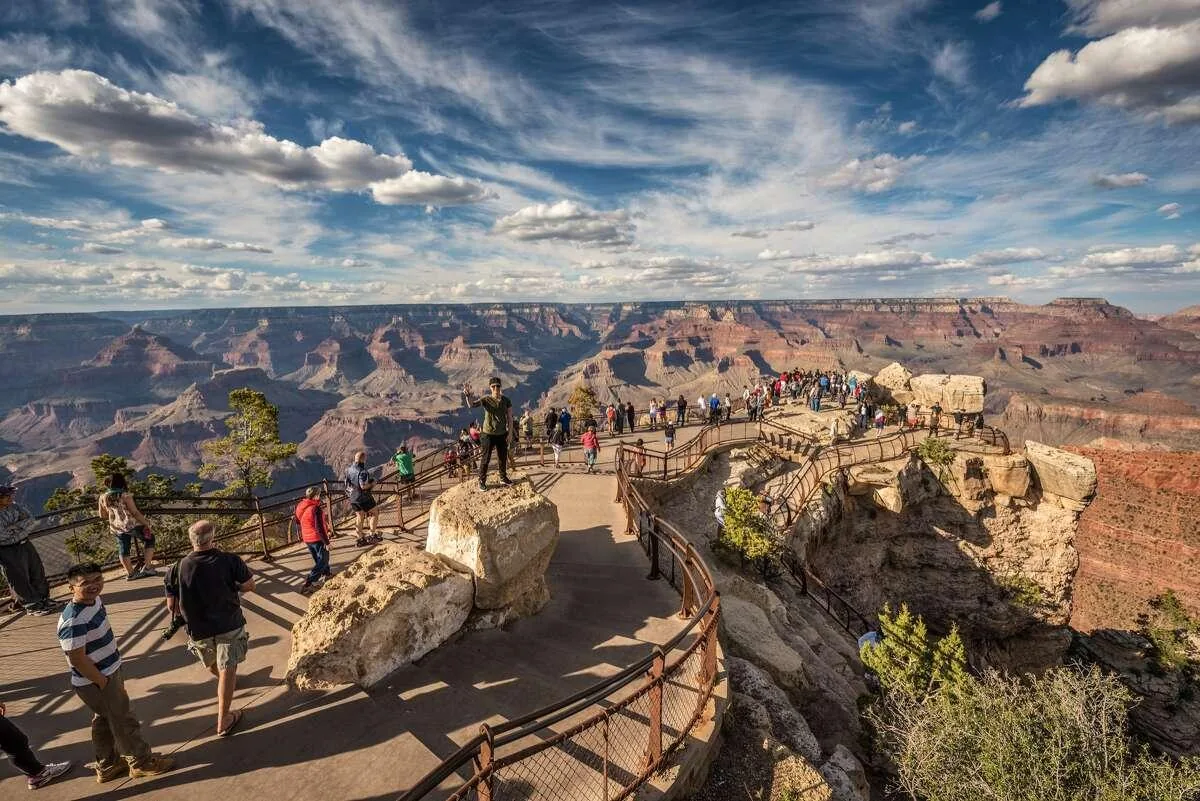
You think you know what the Grand Canyon looks like. You have seen the photos your whole life. Then you walk up to the edge for the first time, the ground simply drops away into a mile-deep gorge that runs farther than your eye can follow, and the scale of it knocks the words right out of you. Photos flatten it. Standing on the rim, watching the light move across layers of red and gold rock that took the Colorado River millions of years to carve, is something else entirely. The canyon does the heavy lifting. Your job is just to show up at the right rim, at the right time of year, with a plan that keeps you out of the long entrance queues and the worst of the heat. This guide handles that part. Treat the prices and dates here as current ranges to plan around, not promises, and always confirm the latest details on the official park site, nps.gov, before you travel.
TL;DR
- Most people mean the South Rim when they say Grand Canyon. It is open year-round, has the famous viewpoints and Grand Canyon Village, and runs free shuttle buses included with your entry.
- The North Rim is higher, cooler, and far quieter, but seasonal. For 2026 it is reopening on a limited basis on May 15 while recovering from the 2025 Dragon Bravo Fire, with no in-park lodging this season. Check nps.gov before counting on it.
- The West Rim and the Skywalk sit on Hualapai tribal land, not in the national park. It is a separate destination with its own tickets, and your park pass does not work there.
- Entry to the national park is roughly $35 per private vehicle, valid for 7 days. The America the Beautiful annual pass (around $80) covers it and every other federal park.
- Driving times to the South Rim: about 4.5 hours from Las Vegas, 1.5 hours from Flagstaff, and 3.5 to 4 hours from Phoenix. The Grand Canyon Railway runs from Williams.
- Spring and fall are the sweet spot. Summer brings crowds and brutal heat in the inner canyon; winter brings snow and quiet on the rim.
- Cell coverage inside the canyon is patchy, so download offline maps before you go and sort your travel data ahead of time.
South Rim, North Rim, or West Rim: which one do you actually want?
The first thing to get straight is that "the Grand Canyon" is not a single gate you drive up to. There are three very different places people visit, and they are hours apart. Picking the wrong one is the most common planning mistake, so let us sort it out before anything else.
The South Rim is the one you are almost certainly imagining. It holds the classic viewpoints, the historic lodges, the visitor center, and Grand Canyon Village, and it is open every day of the year. It draws the vast majority of the park's millions of annual visitors for good reason. Everything is set up for you here: a free shuttle network, ranger talks, easy paved overlooks, and trailheads dropping into the canyon. If this is your first visit, the South Rim is the answer.
The North Rim sits across the canyon and rises about a thousand feet higher, which makes it cooler, greener, and dramatically less crowded. The tradeoff is access. It closes for winter and only opens for the warm months, roughly mid-May through mid-October in a normal year. For 2026 there is an important wrinkle: the North Rim was hit by the Dragon Bravo Fire in 2025, and the park has announced a limited, adaptive reopening starting May 15, 2026, with roads and day-use access returning but no overnight lodging inside the park this season. If the North Rim is your plan, read the current status on nps.gov first, because conditions are still changing.
The West Rim, home of the glass Skywalk, is the one that trips people up most. It is not part of Grand Canyon National Park at all. It sits on the sovereign land of the Hualapai Tribe, runs its own tickets and pricing, and your national park pass does not get you in. It is closer to Las Vegas, which makes it popular for day tours, but the canyon views there are different from the deep, layered scenery of the national park. Go in knowing it is a separate trip with a separate purpose.
| South Rim | North Rim | West Rim / Skywalk | |
|---|---|---|---|
| Part of the national park? | Yes | Yes | No, Hualapai tribal land |
| Open | Year-round | Seasonal; limited 2026 reopening from May 15 | Year-round (separate operator) |
| Crowds | Highest | Lowest | Tour-heavy day trips |
| Elevation | ~7,000 ft | ~8,000+ ft, cooler | Lower, near the river's western end |
| Your park pass works? | Yes | Yes | No, separate ticket |
| Closest hub | Flagstaff / Williams / Tusayan | Kanab, UT area | Las Vegas |
| Best for | First visits, classic views | Solitude, summer escape from heat | Skywalk, quick trip from Vegas |
Entrance fees and passes
Entry to Grand Canyon National Park is charged per vehicle, not per person, which makes it a bargain for a carload. The standard pass for a private vehicle is around $35 and is good for 7 consecutive days, covering everyone riding with you and both the South Rim and the Desert View area. If you arrive on a motorcycle the fee is a little lower, and if you walk or cycle in, it is a smaller per-person rate. Confirm the exact figures on nps.gov, since fees do get revised.
If you plan to see more than one national park in a year, the America the Beautiful annual pass is the obvious move. For roughly $80 it covers entrance to every national park and most federal recreation sites for twelve months, so a single multi-park road trip usually pays for it. There are also free or discounted versions for seniors, current military, fourth-graders, and visitors with a permanent disability. One practical heads-up: the park entrance stations have gone cashless, so bring a card.
A small note for international visitors. The park has introduced an additional fee for non-US residents on top of the standard entrance fee, though holders of an annual or America the Beautiful pass are exempt. The details are still settling, so check the current policy on nps.gov before you go rather than relying on older guides.
How to get there
The South Rim feels remote, and it is, but it is well connected to a few launch points. Which one you choose shapes your whole trip.
From Las Vegas, the drive to the South Rim is around 4.5 hours and covers roughly 275 miles. It is doable as a very long day, but you will spend more time in the car than at the rim, so an overnight in Williams, Tusayan, or Flagstaff is the saner play. Many Vegas day tours actually head to the West Rim and Skywalk instead, which is far closer, so read the fine print on any tour and make sure you know which canyon you are being driven to.
Flagstaff is the most convenient base, about 1.5 hours and 80 or so miles south of the rim. It has a real town's worth of hotels, restaurants, and an airport with connections, and the drive up through the pines is lovely. Phoenix, with the region's largest airport, sits about 3.5 to 4 hours away, which makes it a common fly-in point for a wider Arizona road trip rather than a quick canyon dash.
Then there is the most charming option: the Grand Canyon Railway, which runs from the small town of Williams straight to the South Rim depot in a little over two hours each way. You skip the parking scramble entirely, there is onboard entertainment, and you arrive right in the historic village. It is a relaxed, scenic way in, especially if the thought of fighting for a parking spot at a packed overlook does not appeal.
The best time to visit
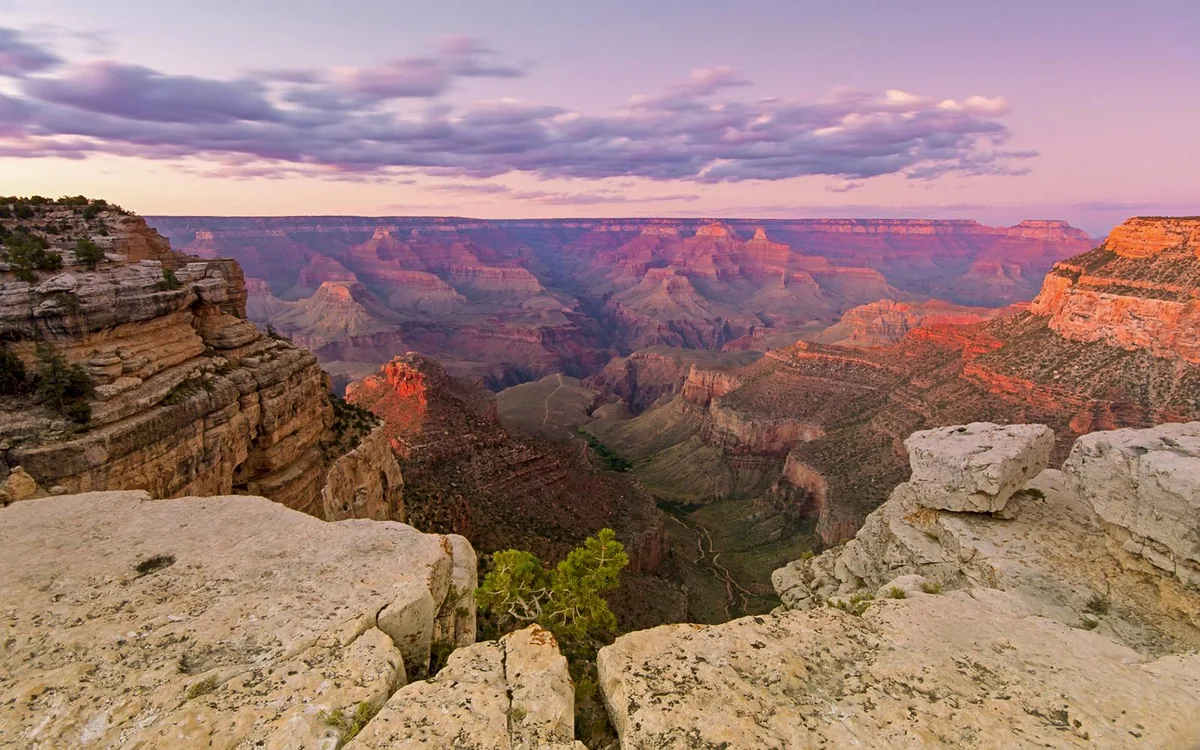
The Grand Canyon is open all year on the South Rim, but the experience swings hard with the seasons, mostly because of one fact: the rim sits near 7,000 feet, while the canyon floor is roughly a mile lower and far hotter. Plan around that gap.
Spring and fall are the best windows, and most regulars will tell you so. Think roughly April, May, September, and October. Daytime temperatures on the rim are comfortable, often in the 60s and 70s Fahrenheit, the light is beautiful, and the crowds are thinner than the summer peak. Pack layers either way, because mornings can be cold and a stray snow flurry on the rim is not unheard of even in late spring.
Summer is the busy, hot season. The rim itself stays manageable, but the inner canyon can roar past 100°F, which turns a midday hike below the rim into a genuine hazard. Summer also brings the biggest crowds and the longest entrance-station queues, so if you visit in July or August, arrive early and treat the cool morning hours as prime time. Winter is the quiet secret. The South Rim stays open, snow dusts the red rock for postcard-perfect scenes, and you can have famous viewpoints nearly to yourself, though some roads and services scale back and you should be ready for ice and cold.
Top viewpoints and the Rim Trail
You do not need to hike into the canyon to be floored by it. The South Rim is lined with overlooks, and a string of the best are walkable or a short shuttle hop apart.
Mather Point is most people's first view, an easy walk from the main visitor center, and it delivers a wide, jaw-dropping panorama right out of the gate. It is also the classic sunrise spot. A short way along is Yavapai Point, paired with a geology museum whose big windows and exhibits help you make sense of the layered rock you are staring at. Further east, reached by car along Desert View Drive, stands the Desert View Watchtower, a 1930s stone tower built as a tribute to Ancestral Puebloan design, with sweeping views toward the Painted Desert and the eastern canyon. Out west, Hopi Point is a beloved sunset perch.
Linking many of these is the Rim Trail, which traces the canyon's edge for miles and is largely flat and partly paved. This is the move for travelers who want the canyon without a strenuous climb: walk a stretch, soak in a viewpoint, then hop the free shuttle bus back. The shuttle network is the South Rim's secret weapon. It is included with your entry, runs frequently, and reaches viewpoints and trailheads that are closed to private cars in peak season, so you can leave the car parked and ride between the best overlooks without the parking stress.
For the light, the rule is simple. Sunrise and sunset are when the canyon glows, the shadows deepen, and the photos finally do it justice. Sunrise brings the bonus of thin crowds, so set the early alarm at least once. Mather Point is the go-to for first light and Hopi Point for the last of it, though both draw a crowd, so arrive with time to spare and a layer for the chill. If the main spots feel busy, walk a few minutes along the Rim Trail in either direction. The view barely changes, but the company thins out fast, and you can watch the colors shift in relative quiet.
Desert View Drive and the Watchtower
Most first-timers stay near the visitor center and never drive the eastern stretch of the rim, which is a shame, because Desert View Drive is one of the best things you can do here with a car. The road runs roughly 25 miles east from Grand Canyon Village toward the east entrance, and you can drive it in your own vehicle year-round, unlike some of the western viewpoints that close to cars in peak season. Give yourself a half day and treat it as a slow, stop-and-start outing rather than a dash.
A handful of pullouts make the drive. Grandview Point earns its name and was an early tourist hub in the canyon's history. Moran Point frames the rock layers and the river gorge beautifully and tends to be quieter than the central overlooks. Lipan Point opens up one of the widest panoramas on the whole South Rim, with a long view of the Colorado River bending through the canyon below, and it is a quietly excellent sunset spot if you would rather skip the crowd at Hopi Point.
The drive ends at the Desert View Watchtower, the 1930s stone tower mentioned earlier, and it deserves a proper stop rather than a quick photo. You can climb the interior stairs past murals painted in the Ancestral Puebloan tradition, and from the top the view stretches toward the Painted Desert and the point where the canyon opens to the east. There is a small visitor contact station, a trading post, and seasonal cultural demonstrations nearby. Because it sits at the far end of the drive and near the east entrance, it also makes a natural first or last stop if you are arriving from or heading toward the Cameron and Flagstaff direction.
Hiking below the rim without getting in over your head
Walking even a little way down into the canyon changes the whole experience. From the rim you look at it; on a trail you feel the walls rise around you and the air warm with every switchback. You do not need to be an athlete to taste this, but you do need to be sensible, because the two marquee trails are steep and the climb out is the hard part. Read the safety section below before you commit to anything.
The Bright Angel Trail is the friendlier of the two for a first descent. It leaves from near Grand Canyon Village, has shade in stretches, and historically offers seasonal water at points along the way, though you should always check whether the water is running on nps.gov before you rely on it. There are natural turnaround spots a manageable distance down that let you experience the trail and still climb out with plenty in the tank. Go down only as far as you are sure you can comfortably come back up, then turn around.
The South Kaibab Trail is the more dramatic option, following a ridgeline with open views in nearly every direction rather than burrowing into a side canyon. The catch is that it is exposed, with little shade and no water along the route, so you carry everything you drink. Reaching it is easiest on the free shuttle, since parking at the trailhead is very limited. For a short, rewarding out-and-back, the early viewpoints along South Kaibab are stunning and turn you around before the trail commits you to a long, hot climb.
For both trails the planning is the same. Start in the cool of early morning, carry far more water and salty snacks than feels necessary, wear real shoes with grip, and pick your turnaround point on the way down rather than in the heat-addled moment when you are tired and the river looks deceptively close. Going down is the easy half. Save your strength for the way up.
Other ways to experience the canyon
Hiking and driving are not the only ways in. The South Rim and the wider region offer several memorable alternatives, and a few are worth booking well ahead because they sell out.
Mule rides are a classic, run by the park concessioner, and there are typically shorter rim-area rides as well as longer trips below the rim with an overnight at Phantom Ranch at the bottom. They book up far in advance and come with weight and age requirements, so plan early if a mule trip is on your list.
The Grand Canyon Railway deserves a second mention here, not just as transport but as an experience in its own right. Riding the vintage train from Williams to the rim, with onboard entertainment and the slow reveal of the high country, turns the journey into part of the trip and spares you the parking scramble entirely.
For seeing the canyon's scale all at once, helicopter and small-plane air tours operate out of the Tusayan area near the South Rim and out of the Las Vegas side toward the West Rim. They are a splurge and the experience varies by operator, but nothing else delivers the sheer breadth of the canyon in a single sweep. River rafting on the Colorado, from gentle smooth-water floats to multi-day whitewater expeditions deep in the canyon, is the most immersive way of all to meet the river that carved everything, though the big trips are planned far ahead and often booked many months out.
Finally, the glass Skywalk on the West Rim is its own outing, as covered above. Remember it sits on Hualapai tribal land with separate tickets, your park pass does not work there, and it is a different kind of view from the deep, layered scenery of the national park. Decide which experience you are actually after before you book a Vegas day tour.
Where to stay
Your biggest lodging decision is inside the park versus the gateway town of Tusayan, and it really comes down to how badly you want to be on the rim at dawn.
Staying inside the park, in the historic lodges of Grand Canyon Village, means you can stroll to the rim for sunrise in minutes, with no entrance queue and no drive. The atmosphere of sleeping in the park is hard to beat. The catch is that these rooms are limited, book out months ahead, and parking in the village can be a hassle. If a dawn visit and that in-park feeling matter most, reserve early and plan around the parking.
Tusayan sits just a few minutes south of the entrance and offers more hotels, more dining, and often better value, plus a handy seasonal shuttle into the park that lets you skip the parking puzzle. The tradeoff is that you join the entrance-station line each morning, which can crawl in peak season, so the park's own advice is to arrive before the late-morning rush or after the afternoon one. Beyond Tusayan, Williams and Flagstaff give you a fuller town experience at the cost of a longer daily drive. There is no wrong answer here, only a tradeoff between rim proximity and amenities.
To make the trade-off concrete, think about it by trip style. If you want to be on the rim for both sunset and the next sunrise without a drive in between, paying more for an in-park lodge or a Tusayan hotel earns its keep, because those golden hours bookend the day and you do not want to be queuing at the gate during either. If you are treating the canyon as one stop on a broader Arizona loop, basing yourself in Williams or Flagstaff costs you a daily commute but buys far more choice in restaurants, shops, and room rates, and it puts you near other sights. And if the in-park atmosphere is the whole point, the lodges of Grand Canyon Village are worth the early booking and the parking patience, because falling asleep and waking up inside the park is a different feeling from driving in each morning.
Where to eat
You will not go hungry on the South Rim, but the options inside the park are a mix of historic sit-down dining and grab-and-go, and the best tables book up. Grand Canyon Village holds the marquee dining room in its flagship lodge, where the food comes with a canyon view and reservations are strongly advised in busy seasons, sometimes well ahead. Around the village and at the visitor center area you will also find more casual cafeterias, a deli, coffee, and a general store where you can stock up on water, electrolyte mixes, and trail snacks before any hike. Out east, the Desert View area has its own seasonal food options near the Watchtower.
The practical move is to carry more food and water than you expect to need, especially if your day involves driving Desert View or dipping below the rim, because services are spread out and you do not want to be rationing snacks at a distant overlook. Tusayan adds a cluster of restaurants and fast food just outside the gate, and Williams and Flagstaff open up a full range of dining for evenings when you want more than park fare. As with everything here, in-park convenience trades against choice and price the moment you leave the boundary.
Visiting in winter
Winter is the South Rim's best-kept secret, and it rewards travelers willing to pack for the cold. The rim stays open, the summer crowds vanish, and a dusting of snow on the red and gold rock makes for some of the most striking scenes the canyon offers. You can stand at famous overlooks that would be shoulder-to-shoulder in July and have them nearly to yourself, with the low winter light raking across the layers in a way that flatters every photo.
The catch is conditions. At 7,000 feet the rim gets genuinely cold, icy, and occasionally snowed in, so come prepared. Pack proper layers, a warm hat and gloves, and footwear with grip, because paved paths and viewpoints can turn slick. Some roads, services, and seasonal facilities scale back for the winter, and the high country drive in can see snow and ice, so check road status and weather on nps.gov before you set out and keep an eye on the forecast. Below the rim, trails like Bright Angel and South Kaibab can hold ice and packed snow near the top, where traction devices for your shoes are often essential, so the casual winter hiker should be cautious and well equipped. Go in clear-eyed about the cold and winter may give you the most memorable version of the canyon you will ever see.
Traveling with kids and the Junior Ranger program
The Grand Canyon is a genuinely great family destination, partly because so much of the wow factor needs no hiking at all. The paved overlooks near the visitor center, Mather Point, Yavapai Point and the geology museum, and the easy stretches of the Rim Trail let young kids experience the canyon's scale safely, and the free shuttle buses are a small adventure of their own that spares everyone the parking stress. Build in time at the geology museum, where the big windows and hands-on exhibits help children connect the layered rock outside to the story of how the canyon formed.
The standout for families is the Junior Ranger program, the National Park Service tradition where kids pick up an activity booklet, complete age-appropriate tasks during their visit, and are sworn in as Junior Rangers with a badge. It turns a day of looking at viewpoints into a scavenger hunt with a purpose, and it quietly teaches them about geology, wildlife, and why the place is protected. Ask for the booklet at the visitor center when you arrive.
A few family-minded cautions are worth repeating. The canyon's edges are often unfenced and the drop is real, so keep a firm hold on small children at every overlook and on the Rim Trail. Heat and altitude tire kids faster than adults, so carry plenty of water and snacks, plan shade and rest breaks, and keep any below-the-rim walking very short and very early. With those guardrails in place, the South Rim works beautifully for a wide range of ages.
A word on heat, hiking, and safety
The canyon is stunning and it is also unforgiving, so a little caution goes a long way. The cardinal rule of canyon hiking is that going down is optional, coming back up is mandatory. Trails like Bright Angel and South Kaibab descend fast and tempt you to keep going, but every step down is a harder step back up in thinning air, and the inner canyon can be 20 to 25°F hotter than the rim. Rangers pull exhausted, dehydrated hikers off these trails constantly, especially in summer.
Be realistic. Do not try to hike to the river and back in a single day, which the park strongly warns against. Carry far more water than you think you need, plus salty snacks, start early, turn around with energy to spare, and rest through the hottest midday hours. Stay back from unfenced edges for that photo, keep a close eye on kids, and check current trail and weather conditions on nps.gov before you set out. Respect the canyon and it rewards you. Underestimate it and it does not.
The bottom line
The Grand Canyon lives up to every bit of the hype, and the planning is genuinely simple once you have made the key calls. Choose the South Rim for your first visit, go in spring or fall if your dates are flexible, buy your vehicle or America the Beautiful pass, lean on the free shuttles instead of fighting for parking, and chase the light at sunrise or sunset. Pack layers, carry water, and be honest with yourself about how far down a trail you really want to go.
One last practical thing. Cell coverage inside the canyon is patchy at best, dropping out on trails and at many overlooks, so do not rely on a live signal down there. Download offline maps of the park before you arrive, save your trail routes and any reservations, and you will not be stranded without directions in a dead zone. For everything else, the drive in, the towns, navigating between Vegas, Flagstaff, or Phoenix, and pulling up tickets and lodging, you will want solid data the moment you land in the US. A travel eSIM connects you to a local network with no SIM swap at the airport and no roaming bill waiting at home. Our guide to the Best eSIM for the USA walks through coverage, how much data you actually need, and a setup that takes a few minutes, so you can sort it before you fly and arrive ready to focus on the view.
Frequently asked questions
How much does it cost to enter the Grand Canyon?
Entry to Grand Canyon National Park is around $35 per private vehicle and is valid for 7 days, covering everyone in your car and both the South Rim and Desert View area. If you are visiting more than one national park in a year, the America the Beautiful annual pass at roughly $80 is better value, since it covers entry to all federal parks. Entrance stations are cashless, so bring a card, and confirm current fees on nps.gov before you travel.
Which rim of the Grand Canyon should I visit?
For a first visit, choose the South Rim. It is open year-round, holds the most famous viewpoints and the historic village, and has a free shuttle network that makes getting around easy. The North Rim is higher, cooler, and much quieter but only open seasonally, with a limited reopening planned for 2026 after the 2025 fire. The West Rim and Skywalk are a separate destination on Hualapai tribal land, not part of the national park.
Is the North Rim open in 2026?
The North Rim is recovering from the 2025 Dragon Bravo Fire, and the park has announced a limited, adaptive reopening beginning May 15, 2026, with day-use access and roads returning but no overnight lodging inside the park for the season. Because conditions are still changing, check the current status on nps.gov before planning a North Rim trip.
Is the Skywalk part of the Grand Canyon National Park?
No. The Grand Canyon Skywalk is at the West Rim, on the sovereign land of the Hualapai Tribe, and it is not part of Grand Canyon National Park. It has its own separate tickets and pricing, and your national park entrance pass does not work there. It is closer to Las Vegas, which is why it features in many day tours, so check which canyon any tour actually visits.
How do I get to the Grand Canyon South Rim?
The South Rim is about 1.5 hours from Flagstaff, 3.5 to 4 hours from Phoenix, and around 4.5 hours from Las Vegas by car. You can also take the scenic Grand Canyon Railway from Williams, which reaches the rim in a little over two hours each way and saves you the parking hassle. Flagstaff and Williams make the most convenient overnight bases.
When is the best time to visit the Grand Canyon?
Spring and fall, roughly April to May and September to October, are the best times, with comfortable temperatures on the rim and thinner crowds than summer. Summer brings the biggest crowds and dangerous heat in the inner canyon, while winter is quiet and often snowy on the rim, with some services reduced. Whenever you go, sunrise and sunset bring the best light.
Do I need to worry about phone signal at the Grand Canyon?
Yes, plan for it. Cell coverage inside the canyon and on many trails and overlooks is patchy or nonexistent, so do not rely on a live signal down there. Download offline maps and save your routes and reservations before you arrive. For the journey and the surrounding towns you will want reliable data, which is where a travel eSIM keeps you connected without roaming charges.
Can I hike into the Grand Canyon as a day trip?
You can walk part way down and back, and it is one of the best things you can do here, but never try to reach the river and back in a single day, which the park strongly warns against. The Bright Angel Trail is the friendlier first descent and has seasonal water at points, while the South Kaibab Trail is more exposed with no water along it. Pick a turnaround point on the way down, start early, carry plenty of water and salty snacks, and remember that going down is the easy half. Always check current trail and weather conditions on nps.gov first.
Is the Grand Canyon good for kids?
Yes, it works well for families. Most of the awe needs no hiking, since paved overlooks near the visitor center, Mather and Yavapai points, the geology museum, and the easy Rim Trail let young children take in the scale safely, and the free shuttle buses are an adventure of their own. The Junior Ranger program, where kids complete an activity booklet and earn a badge, is a highlight. Keep a firm hold on children at the unfenced edges, carry water and snacks, and watch for heat and altitude tiring them faster than adults.
Is Desert View Drive worth it?
Very much so. The roughly 25-mile drive east from Grand Canyon Village stays open to private cars year-round and strings together quieter overlooks like Grandview, Moran, and Lipan points, ending at the Desert View Watchtower with its painted interior and long views toward the Painted Desert. Give it a half day and treat it as a slow, stop-and-start outing. Lipan Point in particular makes a quietly excellent sunset spot away from the central crowds.
Convinced?
Try Esim70 — plans from $1.36/day
150+ countries · Instant delivery · No commitment.